
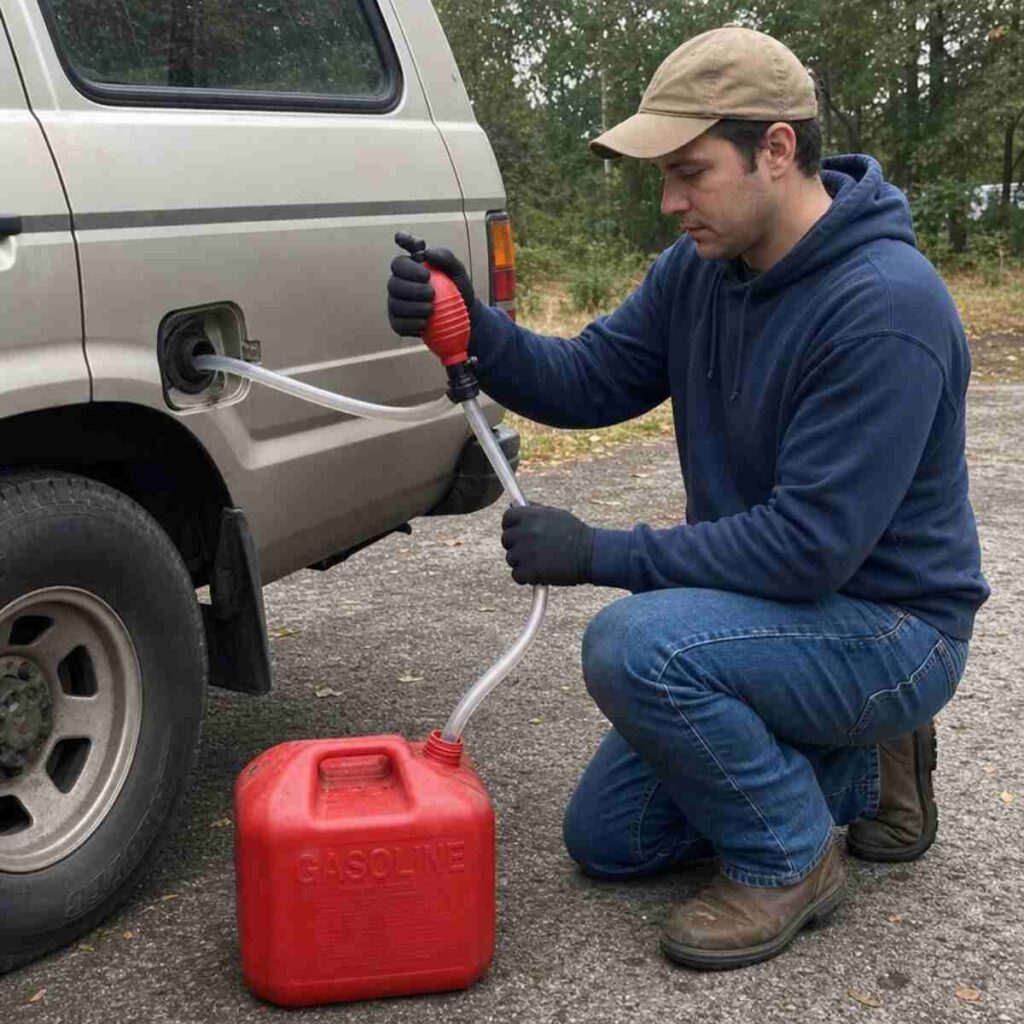
Whether you are preparing a small engine for winter, facing an unexpected power outage and needing generator fuel, or performing major automotive maintenance, knowing how to safely transfer gasoline is a crucial skill. Learning how to Siphon Fuel correctly can save you time and money and potentially prevent dangerous accidents. The actual Interesting Info about How to Siphon Fuel.
In the past, siphoning was as simple as sticking a garden hose into a tank and sucking on the end until the fuel flowed. Today, both safety standards and modern vehicle engineering have changed the landscape. Modern cars feature anti-rollover valves, and the health hazards of ingesting gasoline are better understood.
This comprehensive guide will walk you through the essential tools, physics, safety protocols, and modern techniques required for safe fuel extraction.
1. The Physics of Siphoning: How It Works
Before diving into the physical steps, it helps to understand the science. Siphoning relies entirely on gravity and atmospheric pressure to move liquid from a higher elevation to a lower one across a barrier (such as the lip of a gas tank).
When siphoning gasoline using gravity, a vacuum is created inside a tube. Once the liquid is drawn up and over the tube’s highest point, gravity pulls it down into the receiving container. Because the receiving container is lower than the source, the weight of the falling liquid creates a continuous low-pressure void that pulls more liquid up from the source tank. The flow will only stop when air enters the line, the source tank is empty, or the receiving container is raised above the level of the source tank.
2. Safety First: The Crucial Precautions
Gasoline is highly volatile, highly flammable, and incredibly toxic to the human body. Before you even touch a hose, you must prioritize safety.
The Risks of Siphoning Gas by Mouth
Let’s address the most common, yet most dangerous, historical method: using your mouth to start the vacuum. Never do this. The risks of siphoning gas by mouth are severe and life-threatening.
- Aspiration: If you accidentally swallow or inhale gasoline, it can coat your lungs, leading to a condition called chemical pneumonitis. This can be fatal.
- Toxicity: Even small amounts of ingested fuel can cause severe gastrointestinal distress, organ damage, and central nervous system depression.
- Vapor Inhalation: Breathing in the concentrated fumes right out of the hose can cause dizziness, nausea, and loss of consciousness.
Gasoline Inhalation Safety Precautions
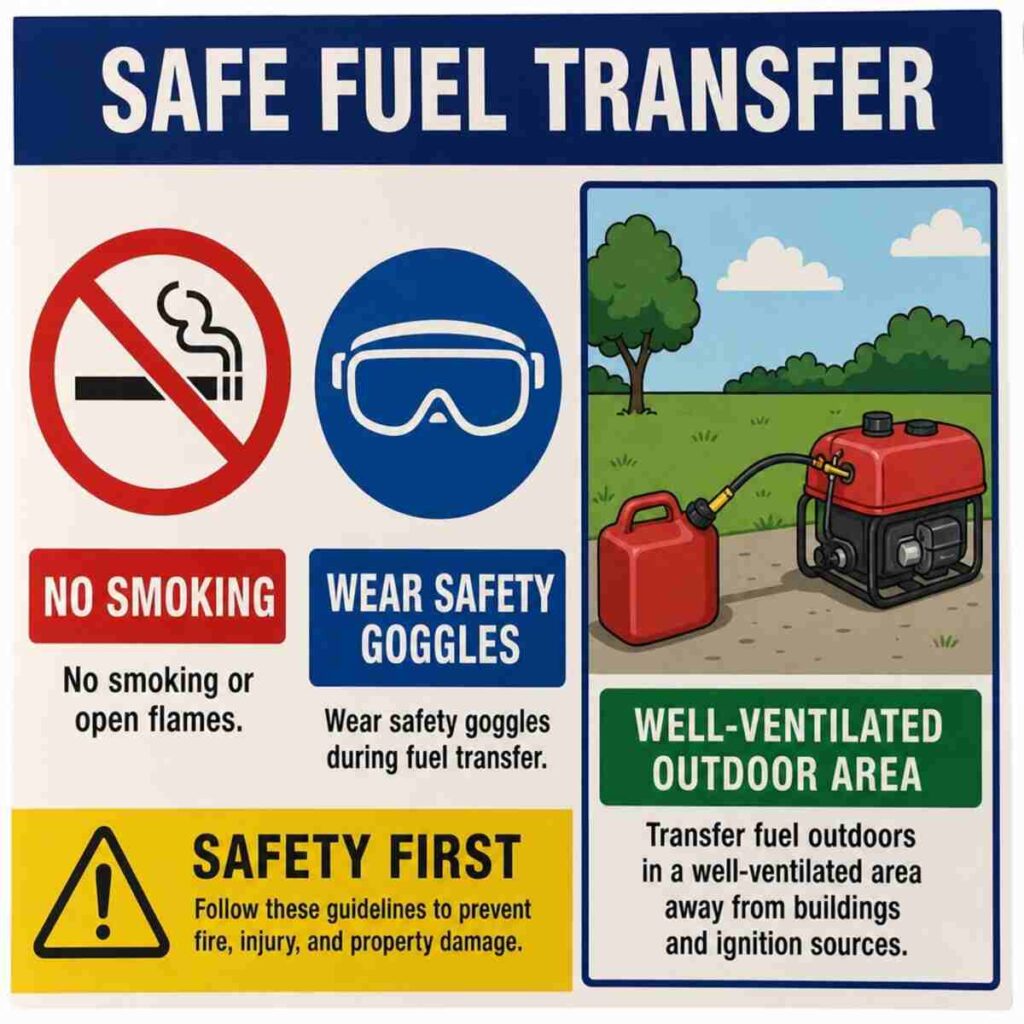
Always work outdoors or in a highly ventilated area. Gasoline inhalation safety precautions dictate that you should position yourself upwind of the fuel source. If you begin to feel lightheaded or develop a headache, stop immediately and move to fresh air. Wearing a respirator rated for organic vapors is highly recommended if you are draining large tanks or working in a garage.
Venting Fuel Vapors During Transfer
As fuel moves from one container to another, it displaces the air in the receiving container. This displaced air is rich in highly explosive gasoline vapors. Venting fuel vapors during transfer is critical.
- Keep the area free of all ignition sources—no smoking, no open flames, and no sparks.
- Ensure both the vehicle and the receiving container are grounded to prevent static electricity build-up. Place portable plastic gas cans on the ground before filling them; never fill a gas can while it is sitting in a truck’s plastic bedliner.
3. Choosing the Right Tools and Equipment
Using a standard rubber garden hose is a recipe for disaster. Gasoline acts as a solvent and will rapidly dissolve improper plastics and rubbers, ruining your fuel and destroying the hose. Understanding the compatibility of fuel transfer hose materials is essential. Look for hoses made of Polyurethane, PVC, or Nitrile rubber, which are specifically formulated to resist petrochemical degradation.
Here are the best tools for the job:
The Manual Hand Fuel Pump
A manual hand fuel pump is an inexpensive, effective tool. It usually consists of a rubber bulb with a one-way valve on each end, connected to two lengths of clear hose. By squeezing the bulb, you create the vacuum necessary to pull the fuel over the apex of the tank. Once gravity takes over, you can stop squeezing.
The Shaker Siphon Hose (Jiggler Pump)
One of the most popular modern tools is the shaker siphon hose. This ingenious device uses a brass or copper fitting at the end of the hose that contains a small glass marble or a check valve.
How to use the jiggler pump:
- Submerge the metal valve end entirely into the fuel source.
- Place the other end into your receiving container (which must be lower than the source).
- Vigorously shake the metal end up and down in the fuel.
- The rapid up-and-down motion forces fuel past the marble check valve. The marble prevents the fuel from dropping back down.
- After a few seconds of shaking, the fuel will climb the hose, crest the top, and gravity will take over.
These are incredibly easy to use, and self-priming siphon hose instructions rarely require more than “insert and shake.”
Emergency Fuel Extraction Kit
For off-roaders, boaters, and preppers, investing in an emergency fuel extraction kit is a smart move. These kits often include a 12-volt electric pump that connects to your vehicle’s battery, anti-static grounding wires, and multiple hose adapters. They eliminate the need for gravity, allowing you to pump fuel uphill into a taller container.
4. How to Siphon Fuel: Step-by-Step Guide
If you are dealing with a standard tank without a rollover valve (such as a classic car, tractor, or generator), here is how to perform the transfer cleanly.
- Position the Vehicles/Containers: Ensure the receiving container is physically lower than the bottom of the fuel tank you are draining. Gravity is your engine here.
- Feed the Hose: Feed the intake side of your manual hand fuel pump or shaker siphon hose into the source tank until you feel it hit the bottom or submerge in the liquid.
- Route the Line: Run the other end of the hose into your approved gasoline storage container.
- Prime the Line: Use the bulb or the jiggler action to pull the fuel up and over the lip of the tank.
- Monitor the Flow: Once the flow starts, step back and monitor it. Keep a rag handy for spills.
- Break the Siphon: To stop the flow, simply pull the intake hose out of the liquid in the source tank, or raise the receiving container above the level of the source tank. Hold the hose up to let the remaining fuel drain out.
5. Overcoming Modern Automotive Engineering
If you want to know how to siphon fuel from a car built after the late 1990s, you will quickly find that sticking a hose down the filler neck doesn’t work.
Removing Fuel from Modern Vehicles
Modern cars are equipped with rollover valves (also known as anti-siphon valves). These are safety devices located at the base of the filler neck where it meets the gas tank. Their primary purpose is to prevent fuel from spilling out in the event of a rollover crash. A secondary effect is that they block hoses from entering the tank.
Navigating the Obstacles: Bypassing Anti-Siphon Valves
If you are doing legitimate mechanic work—such as replacing a failing fuel pump or dropping a damaged gas tank—you will need to bypass these security measures. Do not attempt to forcefully jam a hose through the valve; you will permanently destroy the rollover protection system, resulting in a costly repair and an illuminated Check Engine Light.
Here are the professional methods for bypassing anti-siphon valves:
Method 1: Disconnecting the Filler Neck (Mechanical Bypass). If you are wondering how to remove the anti-siphon from the fuel tank mechanisms directly, the safest way is to do so from underneath the vehicle.
- Safely jack up the vehicle and secure it on jack stands.
- Locate the rubber hose connecting the metal fuel filler neck to the gas tank.
- Loosen the hose clamp and slide the rubber hose off the tank inlet.
- You have now bypassed the filler neck entirely. You can insert your siphon hose directly into the tank inlet to drain the fuel safely before dropping the tank for repairs.
Method 2: Using the Vehicle’s Fuel Pump (The Relay Method). Instead of gravity, use the car’s own mechanics. This is the cleanest way of removing fuel from modern vehicles.
- Locate the Schrader valve on the engine’s fuel rail. (Relieve fuel pressure first!).
- Attach a fuel pressure tester hose (with the gauge removed) to the valve, and run the drain tube into a gas can.
- Locate the Fuel Pump Relay in your fuse box.
- By bridging the specific pins in the relay socket (consult your vehicle’s wiring diagram), you can force the fuel pump to run continuously while the key is in the “ON” position (engine off).
- The car’s own pump will safely empty the tank into your container.
6. Common Applications for Fuel Siphoning
Transferring Gas from Car to Mower
In the middle of summer, realizing your lawnmower is empty while the gas station is miles away is frustrating. If you have an older car without an anti-siphon valve, transferring gas from car to mower is a quick 5-minute task using a manual hand fuel pump. Always pump into a gas can first, rather than directly into the hot mower, to prevent fuel from spilling onto the hot engine block.
Draining Gas Tank for Storage
If you have a motorcycle, ATV, or classic car that you are putting away for the winter, leaving untreated gasoline in the tank is a mistake. Modern ethanol-blended gasoline goes bad quickly, absorbing moisture from the air and turning into a corrosive varnish that clogs carburettors and fuel injectors. Draining the gas tank for storage with a shaker siphon helps keep your fuel system clean over the winter. Once drained, start the engine and let it run until it stalls to clear the fuel lines completely.
Draining Boat Fuel Tanks
Marine environments present unique challenges. Draining boat fuel tanks at the end of the boating season is standard maintenance, as boats sit unused for months. Because boat tanks are often large and built into the hull (making gravity siphoning difficult), an emergency fuel extraction kit or a high-capacity 12-volt transfer pump is usually required. Be incredibly cautious about venting fuel vapors during transfer on a boat, as heavier-than-air gasoline fumes can pool in the bilge, creating a massive explosion hazard if an electrical spark occurs.
7. What to Do with Old Siphoned Fuel
If you are siphoning fuel because it has gone stale or become contaminated with water, do not reuse it in a modern engine.
- Dilution: Slightly stale fuel can sometimes be safely diluted into the tank of a larger vehicle (like a truck) that is mostly full of fresh, premium gas.
- Small Engines: Older, low-compression engines, such as lawn mowers, can sometimes burn slightly degraded fuel.
- Disposal: If the fuel smells sour like varnish or is heavily separated from water, it must be disposed of at a hazardous waste facility. Never pour gasoline onto the ground, into a drain, or into the garbage.
Conclusion
Knowing How to Siphon Fuel is an incredibly practical skill for mechanics, homeowners, and emergency preparedness. By understanding the physics of gravity-based gasoline siphoning and respecting the chemical’s highly volatile nature, you can safely move fuel where it needs to go.
Always remember that the risks of siphoning gas by mouth are never worth taking. Equip your garage with the proper tools—whether that is a shaker siphon hose, a manual hand fuel pump, or a battery-powered emergency fuel extraction kit. Pay attention to the compatibility of fuel transfer hose materials, strictly follow gasoline inhalation safety precautions, and know how to operate modern vehicles’ anti-siphon systems safely. With the right equipment and respect for the safety protocols, fuel transfer is a safe, routine task.