









Have you ever been in a corner shop, seen a shelf of rare Japanese KitKats, and wondered, ‘How on earth did that get here?’ It wasn’t by accident. The secret journey from a factory overseas to that local shelf is a hidden system that decides what we can buy, revealing why some products are everywhere, and others are incredibly hard to find. Obtain the Best information about brand distribution UK.
Now, imagine you’ve created a brilliant new hot sauce in your Cornwall kitchen. How do you get it into the hands of a customer in Glasgow? This is the fundamental challenge of brand distribution in the UK: bridging the vast physical gap between where a product is made and where people can actually purchase it. Driving it there yourself isn’t a real option, so an entirely different solution is needed.
This journey from producer to shopper isn’t a straight line. It involves a cast of characters operating behind the scenes, including retailers (the shops you know), distributors (a brand’s storage and delivery partner), and wholesalers (the bulk suppliers who serve smaller businesses).
This guide pulls back the curtain on the invisible logistics that fill our shelves, demystifying everything from the challenges of importing goods to the strategies that make a brand a household name. You’ll have that “Aha!” moment about the products you see every day.
The Farmer’s Market Model: Why Some Brands Sell Directly to You
Have you ever bought something straight from a brand’s own website? Think of a small business you found on Instagram, or a new mattress brand that only sells online. This is the simplest way for a company to sell its products, cutting out all the middlemen. It’s the modern equivalent of buying your bread directly from the baker at a market stall. In the business world, this is known as the Direct-to-Consumer (DTC) model, and the internet has made it more popular than ever.
The biggest advantage for the brand is keeping more of the profit. When a product is sold in a big supermarket, the store takes a significant cut of the price. By selling directly, the brand gets to keep that money for itself. They also get complete control over the customer’s experience, from the look of the website to the way the product is packaged. This hands-on approach to direct-to-consumer fulfillment in the UK allows them to build a stronger relationship with their buyers.
However, this model has one major drawback: reach. A baker at a single market can only sell to the people who walk past their stall. Likewise, a brand with only a website has to spend a lot of time and money on advertising just to get people to find them. This is the core challenge when setting up a UK distribution network from scratch. To truly grow and become a household name, most brands realise they need to be where millions of customers already are: on the shelves of shops.
Getting on the Shelf: The First Big Step of Partnering with Shops
So, how does a brand escape the limits of its own website and reach millions of potential customers? The answer is a strategy as old as commerce itself: getting their products into shops where people are already browsing and buying. This is the first major leap from selling directly to joining the wider world of commerce.
This is where the retailer comes in. A retailer is simply any business that sells products directly to you, the customer. This isn’t just the big supermarkets like Sainsbury’s or Tesco. It’s also high-street chains like Boots, department stores like John Lewis, your local corner shop, and even online marketplaces like Amazon. For a brand, getting into these different UK product distribution channels is the primary goal for growth.
For a growing company, securing a deal with a retailer is a game-changer. Suddenly, your product is visible to thousands of shoppers who weren’t actively searching for it online. This exposure is something that even a big advertising budget can struggle to match. However, this success creates a huge new headache. Imagine a small jam maker in Scotland now has orders from 50 different delis across England. That’s 50 separate boxes to pack and 50 deliveries to arrange.
Making the product is one thing, but getting it to all these shops efficiently is a completely different and costly challenge. A brand can’t run its own fleet of vans to every single store. This logistical puzzle is a core part of any UK retail distribution strategy, and for most brands, it’s impossible to solve alone. They need a new kind of partner to handle the heavy lifting.
The Game Changer: How a Distributor Magically Gets a Brand Everywhere
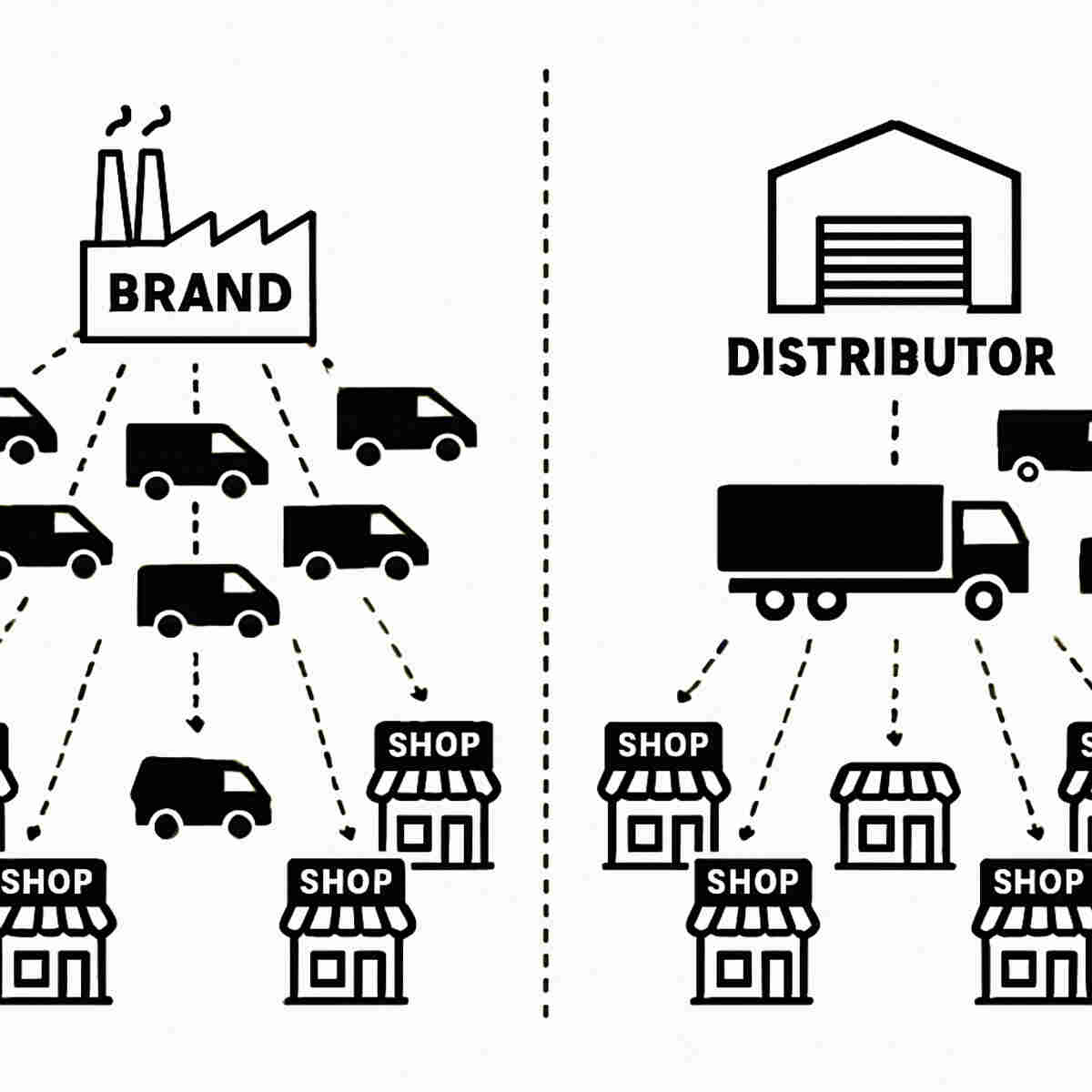
This logistical nightmare is where a special partner, the distributor, enters the picture. Think of a distributor as a brand’s central hub for the entire country. Instead of the brand having to manage dozens of small, complicated deliveries, they send one large, simple shipment to the distributor’s warehouse. The distributor then breaks down that big delivery into the smaller orders destined for each shop.
Rather than our Scottish jam maker arranging 50 separate van trips, they now only have to arrange one lorry to the distributor. This single step makes the entire process of brand distribution in the UK vastly more efficient, saving the brand an enormous amount of time, money, and hassle. Suddenly, selling to a shop in Cornwall is just as easy as selling to one down the road. This efficiency is what allows a small brand to have a truly national presence.
Crucially, a distributor often does more than just deliver products. Many act as the brand’s sales force. Their salespeople already have relationships with hundreds of independent shops, delis, and cafes. By signing a UK distribution agreement, a brand gains access to this entire network overnight. The distributor’s team will actively pitch the product to retailers, securing new orders and expanding the brand’s reach far faster than they could on their own.
By partnering with the right company, a brand gets an instant, nationwide sales and delivery team rolled into one. This is why the question of how to find a distributor in the UK is one of the most important that a young brand will face. But you might have also heard the term ‘wholesaler’ used. Are they the same thing, or do they play a different role in this journey?
Distributor vs. Wholesaler: What’s the Real Difference?
It’s a common point of confusion, but the distinction between a distributor and a wholesaler is crucial. While both handle products in bulk, they serve different masters and have fundamentally different relationships with the brand.
The easiest way to think of a wholesaler is as a giant ‘supermarket for businesses’. Imagine a place like Booker or the business section of Costco. A corner shop owner or a café manager can walk in and buy products from hundreds of different brands—Coca-Cola, Walkers crisps, and McVitie’s biscuits—all in one go. The wholesaler’s job is to offer a massive variety of popular goods that retailers can then buy in bulk to stock their own shelves. Their relationship is with the shop owner, not the brand.
This is where the key difference in the UK distributor vs wholesaler dynamic lies. The distributor works for the brand, while the wholesaler works for the retailer.
- Distributor: A brand’s chosen partner, actively selling and marketing the brand, often with an exclusive deal for a territory or type of shop.
- Wholesaler: A marketplace for shops, stocking thousands of brands with no allegiance to any single one. Shop owners go there to buy whatever they need.
In many FMCG distribution models in the UK, these two players actually work together in a sequence. A brand’s exclusive distributor might sell a huge pallet of hot sauce to a wholesaler. That wholesaler then breaks it down, allowing hundreds of small, independent takeaways to buy just one or two cases at a time. The wholesaler simply becomes another customer for the distributor, creating one more path for a product to reach you.
The Menu of Options: How Brands Choose Their ‘Distribution Channels’
It’s no accident that you can find a certain craft beer on tap at your local pub, but it’s nowhere to be found in the supermarket. Or why a specific brand of fancy olives is only sold in independent delis. The answer isn’t just about popularity; it’s about a deliberate choice a brand makes. These different paths to market are known as distribution channels.
Think of it like a menu of options for selling a product. A brand, often with its distributor, must decide which option is the best fit. These choices are a core part of any UK retail distribution strategy. For most consumer goods, the menu has four main courses:
- Grocery: The big weekly-shop supermarkets like Asda, Tesco, and Lidl.
- Independent & Convenience: Your local corner shop, off-licence, or neighbourhood deli.
- Foodservice & On-Trade: Places that serve you directly, like pubs, cafes, hotels, and restaurants.
- E-commerce: Selling online, either through the brand’s own website or on a giant marketplace like Amazon.
Crucially, each of these UK product distribution channels operates differently. Getting a product into a supermarket involves complex logistics and huge volumes, while supplying a pub might require delivering kegs instead of bottles. A brand may not have the resources or desire to compete in every channel at once. This is why some FMCG distribution models in the UK focus specifically on pubs, while others focus entirely on getting onto supermarket shelves.
Choosing a channel is just the first step. To secure their place on a shelf or a bar tap, a brand and its distributor must formalise their partnership. This all comes down to a crucial document that sets the rules of the game.
The Handshake Deal: What a UK Distribution Agreement Actually Is
Once a brand and a distributor decide to work together, they don’t just shake on it. They create a formal contract that acts as the official rulebook for their partnership. This is what a UK distribution agreement is at its core: a document that clearly defines the relationship. It answers crucial questions like which products the distributor can sell, the territories they can cover, and the goals they need to hit. Think of it like a detailed job description, ensuring both the brand and the distributor are on the same page and working towards the same objectives.
Perhaps the most powerful rule in this book involves exclusivity. An exclusive distribution agreement gives one distributor the sole right to sell a brand’s products in the UK. For the distributor, this is a huge vote of confidence; they can invest heavily in marketing and sales, knowing no other company can swoop in and steal their business. For the brand, it means having a single, dedicated partner who is fully focused on making their product a success. This legal protection is why distributors are willing to take a chance on a new or unknown brand.
This formal partnership is especially vital when it comes to importing and distributing goods in the UK. An American hot sauce company or an Italian pasta maker can’t just start sending pallets to Tesco. They need a UK-based partner who understands the market, has the warehouse space, and owns the delivery fleet. The distribution agreement is the legal key that allows the UK partner to bring those international goods into the country and begin the hard work of getting them onto shelves. But even with the perfect contract signed, the real challenges are just beginning.
The Hidden Hurdles: Why Getting Products into UK Shops Is So Hard
Even with a signed agreement, the journey from factory to shopping basket is filled with obstacles. The first and biggest is the sheer cost of product distribution in the UK. Think about a £3 jar of artisan jam on a supermarket shelf. After the shop takes its cut and the distributor takes theirs to cover warehousing and delivery, the original brand that made the jam might only receive 50p. This tight profit margin means brands must sell huge volumes just to break even, making every sale a high-stakes event.
Beyond the financial squeeze lies a fierce battle for visibility. A supermarket like Tesco only has a limited number of shelves, and every brand wants to be on them. This “shelf space” is like prime real estate; brands often have to pay extra fees or offer deep discounts just to get a spot. The same is true online, where thousands of products compete to be on the first page of Amazon. This intense competition is one of the biggest challenges of distributing products in the UK, as small brands are often outspent by global giants.
Finally, there’s the sheer physical challenge of moving goods across the country. Getting a product from a warehouse in the Midlands to hundreds of individual shops—from the Scottish Highlands to the coast of Cornwall—is a logistical nightmare. It involves navigating busy motorways, tight city-centre delivery restrictions, and unpredictable British weather. Each step adds cost and complexity, requiring a delivery network that is both incredibly efficient and robust.
Faced with these hurdles, it can seem impossible for a small company to compete. Building a dedicated warehouse and a fleet of lorries is simply out of reach for most. So how does a new craft beer or a small cosmetics line ever stand a chance? For many, the answer lies in not trying to do it all themselves.
A Modern Shortcut: How Small Brands Use ‘3PL’ Services to Grow
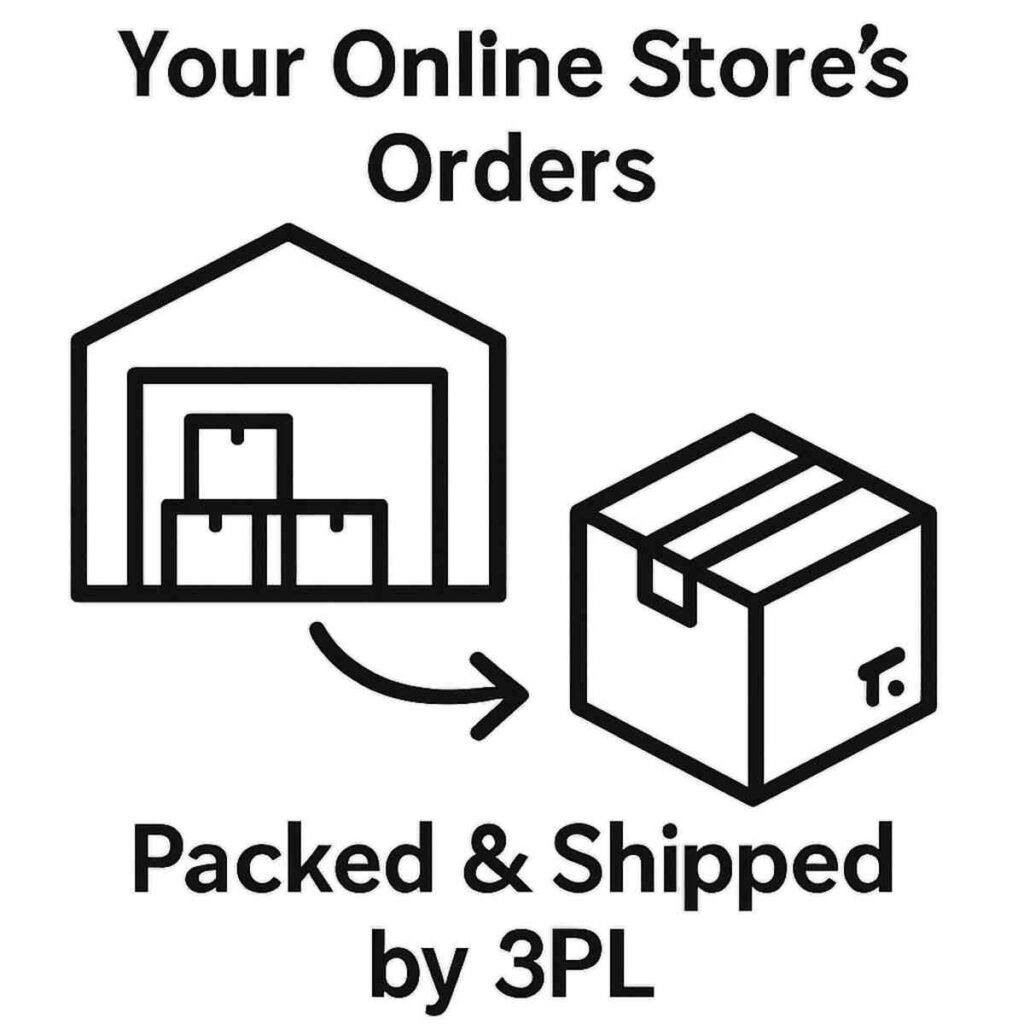
But what if a brand isn’t trying to get into Tesco and instead sells directly to customers from its own website? Running a warehouse and a packing station from a spare room quickly becomes impossible. This is where companies offering third-party logistics (3PL) UK services step in. Think of a 3PL as renting a slice of a massive, professional warehouse. The brand sends all its stock there, and when an order comes through on its website, the 3PL team picks the item, packs it, and ships it directly to the customer.
Crucially, this is where a 3PL differs from a distributor. A distributor’s main job is to sell the brand’s products to other businesses, like supermarkets or pub chains. A 3PL, on the other hand, does no selling at all. Its sole focus is on “order fulfillment”—the physical process of getting a product you’ve already sold into your customer’s hands. They are the engine behind the scenes of countless online stores.
This model has been a game-changer for modern brands. It allows a small business to offer fast, professional delivery without the astronomical cost of owning a warehouse and hiring staff. By handling the complexities of direct-to-consumer fulfillment in the UK, these partners are often considered among the best distribution companies for small businesses UK that focus on e-commerce. It’s the shortcut that lets a brilliant idea from a kitchen table compete with the biggest names in the business, one neatly packed box at a time.
Your New Supermarket X-Ray Vision: Seeing the Hidden Network
What was once a simple supermarket shelf is now revealed as the final stop in a complex journey. The path of that craft hot sauce from a Cornwall kitchen to a Glasgow basket is no longer a mystery. You can see the distinct roles in that journey: the creator with a great idea (the brand), the logistical powerhouse moving it across the country (the distributor), and the final stop that puts it in your hands (the retailer).
Your new knowledge turns every shopping trip into a small investigation. The next time you’re in a shop, pick up an interesting item that isn’t a global giant. Try to trace its path backwards, guessing which of the UK product distribution channels it travelled through. By simply asking “how did this get here?”, you are actively decoding the supply chain that shapes what we buy.
This is your new superpower: a kind of X-ray vision for commerce. You no longer just see products; you see the invisible network of strategy and relationships behind the entire system of brand distribution UK. The shelves have come alive with stories of ambition, partnership, and logistics, and your weekly shop will never look quite the same again.
