
In 2002, the idea of playing a console game with someone three states away felt like science fiction. While we take instant matchmaking in Fortnite for granted today, the PlayStation 2 quietly laid the groundwork for the connected world we live in. It wasn’t just about local multiplayer on the couch anymore; it was the start of a digital revolution that would eventually make the world much smaller. Often the Amazing fact about login orca128.
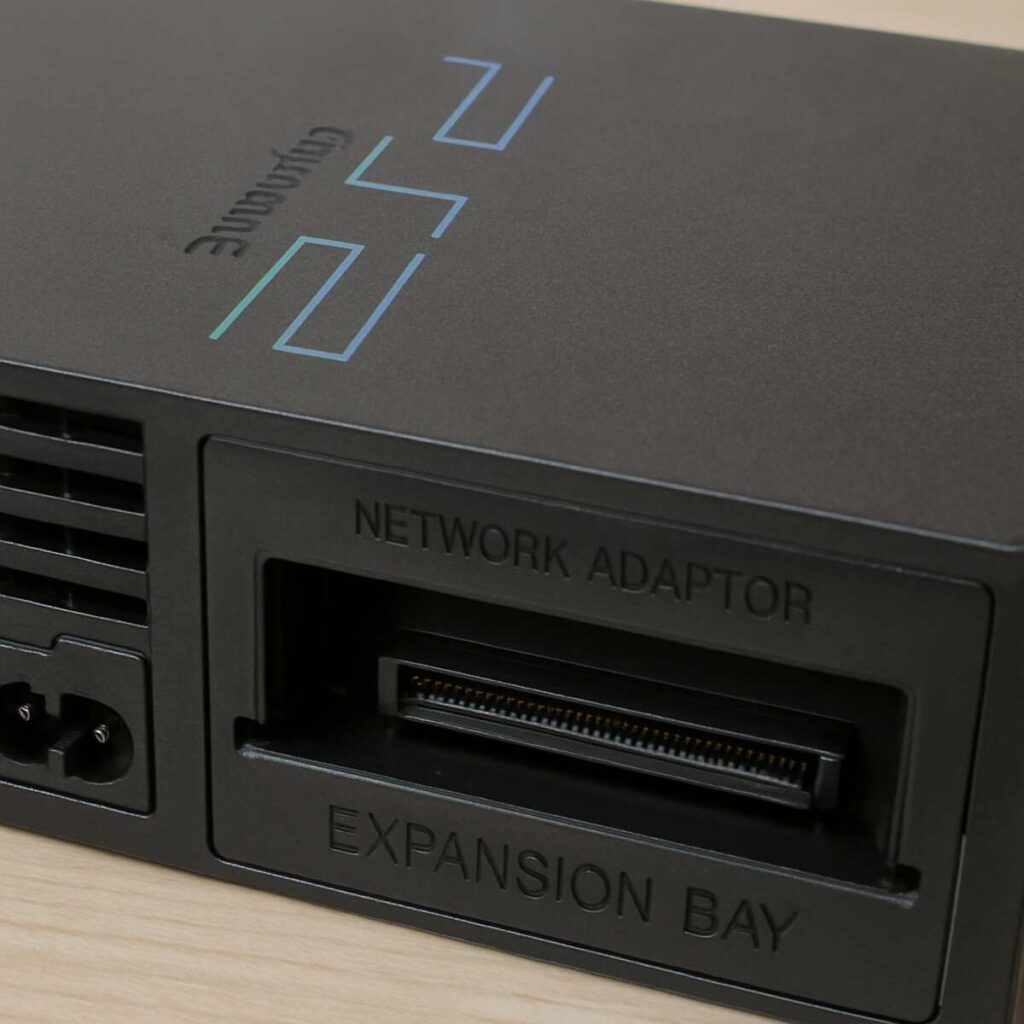
You probably remember your PS2 primarily for Grand Theft Auto or Final Fantasy X, viewing it as a strictly offline machine that lived under your TV. However, tucked away in the console design was a capability that changed gaming forever. This expansion feature allowed for a Network Adapter, a hardware bridge between your living room and the wider internet.
![Image: A close-up photograph of a PlayStation 2 ‘Fat’ model showing the expansion bay on the back where the network adapter connects.]
Connecting back then required more patience than today’s plug-and-play standards. During the early evolution of PlayStation 2 multiplayer gaming, players navigated the awkward transition between dial-up and broadband internet. The PS2 attempted to accommodate both speeds to bring players together, bridging the gap between sipping information through a straw and drinking from a firehose.
Unlike modern ecosystems where you sign into a single account for everything, the PS2 era was the Wild West of networking. There was no centralized PlayStation Network (PSN) to manage friends, trophies, or messages. Instead, game publishers ran their own servers, meaning your identity in Tony Hawk’s Pro Skater was completely separate from your rank in Call of Duty, creating a fragmented but fascinating landscape.
This decentralized approach is why many mistakenly remember the early 2000s as the era of the “lonely console.” Without a unified friends list on the dashboard, the massive communities forming inside individual games remained invisible to outsiders. Yet, inside those specific titles, thousands of players were pioneering the very first console voice chats and organized clan battles.
Titles like SOCOM: U.S. Navy SEALs proved that consoles could handle complex, tactical communication just as well as powerful PCs. In Resident Evil Outbreak, you survived with real people in different cities, relying on actual teamwork rather than just reflexes. These experiences proved that the library of PS2 online games was far ahead of its time, offering features that wouldn’t become standard for another decade.
Because individual companies ran these networks, the official lights eventually went out when publishers shut down their servers. However, the unique architecture of the PS2 allowed dedicated fans to engineer “digital resurrections” for many of these classics. By redirecting the console’s network requests to private, fan-run servers, communities have kept these digital battlegrounds alive long after the industry moved on.
Whether you are looking to revisit a childhood favorite or are curious about the roots of modern multiplayer, looking past the memory cards and disc drives reveals a transformational era.
Finding the Right Bridge: Identifying Which PS2 Hardware Actually Connects to the Internet
If you flip your PlayStation 2 around, you might find a surprise. While millions spent hours playing offline, Sony designed the console with a digital future in mind. However, getting your specific machine online depends entirely on which version of the hardware sits on your shelf today.
Owners of the original, bulky system—affectionately known as the “Fat” PS2—often search for an internet port that isn’t there. Instead, the back of the console features a large, empty cavity covered by a plastic plate, known as the Expansion Bay. This space was essentially a waiting room for an upgrade that wouldn’t arrive until a few years into the console’s lifespan.
To bridge the gap between your living room and the web, you needed the Network Adapter. This accessory screwed directly into the Expansion Bay, acting like an external network card for a PC. It provided two jacks: a narrow one for a standard phone line and a wider one for the Ethernet cables we still use today.
Interestingly, this adapter offered more than just a connection to the outside world. The hardware also passed through connections for power and data deep into the console, allowing a Hard Disk Drive to slot inside the machine. While only a handful of games like Final Fantasy XI originally utilized this storage for massive updates, modern enthusiasts prize this feature because it allows them to preserve their optical drive by loading games directly from internal storage.
Sony streamlined the process with the release of the “Slim” model in 2004. Recognizing that online gaming was shifting from a niche hobby to a standard expectation, engineers integrated internet capabilities directly into the motherboard. If you have this thinner, lightweight version, you won’t need extra accessories; the Ethernet port is built right into the back.
Identifying exactly what you need requires a quick check of your console’s profile:
- Original “Fat” PS2: Requires the external Network Adapter (sold separately), a mounting coin or screwdriver, and a network cable.
- “Slim” PS2: Requires only a network cable (network hardware is built-in).
Once you have identified your hardware and physically connected the console, the challenge shifts from mechanics to speed.
Sipping vs. Gulping Data: Mastering the Dial-Up to Broadband Transition
The internet landscape of the early 2000s looked nothing like the seamless, invisible web we navigate today. While modern consoles download gigabytes of updates in the background, the PlayStation 2 launched during a chaotic transitional period. Players were split between the aging, noisy reliability of dial-up phone lines and the emerging promise of broadband cable.
For those sticking with the older technology, gaming came with household hazards. Because the console dialed a telephone number to connect, playing a match effectively hijacked the home’s landline. If a family member picked up the receiver to make a call, the interference severed the connection instantly. This often resulted in the player being booted from the game and unfairly penalized for “quitting” early.
Visualizing the difference between these connection types helps explain why game performance varied so wildly. Dial-up was like drinking a thick milkshake through a tiny coffee stirrer; the information trickled in slowly, forcing the console to wait for data. Broadband was like drinking from a garden hose. This higher bandwidth allowed for smoother movement and prevented the game from stalling.
Developers had to build games that worked for both the “straw” and the “hose” simultaneously. To ensure fairness, code was often optimized for the lowest common denominator, sending only tiny packets of essential data—like player coordinates and button presses—rather than complex graphics. This is why PS2 online games didn’t look different from their offline counterparts; the console did the visual lifting locally, while the internet only transmitted the raw math.
Speed wasn’t just about data volume, but latency. Even if a player had a connection that could carry lots of data, high latency meant a delay between pressing a button and seeing the character move on the server. In fast-paced shooters, a player with a low-latency broadband connection often saw their dial-up opponents skipping around the map, a phenomenon frustratingly dubbed “lag” that persists even in modern gaming.
Despite these hurdles, the allure of playing with real people overcame the frustrations. The technical stability of broadband eventually paved the way for complex features like voice communication, setting the stage for the platform’s defining tactical experience.
Why SOCOM II Still Holds the Crown for Tactical Teamwork
While broadband solved the data movement problem, the hardware needed a “killer app” to prove online gaming’s worth. SOCOM II: U.S. Navy SEALs arrived in 2003 as that answer. Before this title, console multiplayer was largely restricted to silent matches against strangers. SOCOM II changed the paradigm by bundling a Logitech USB headset, effectively forcing players to communicate. It transformed the PlayStation 2 from a solitary toy into a primitive social network.
The magic of SOCOM lay in how it utilized that headset to enforce teamwork. Unlike modern chat apps where friends chat casually regardless of gameplay, communication here was tied to “Simulated Soldier” logic. If your character was eliminated, your voice channel was immediately cut off from living teammates. This “Dead Men Tell No Tales” mechanic raised the stakes; you couldn’t warn your squad about the sniper who shot you, forcing living players to rely on their eyes rather than chatter from the grave.
This commitment to realism helped SOCOM II cement its reputation among the best multiplayer titles with active fan support. The developers introduced features that became industry standards:
- 16-Player Lobbies: Allowed for complex 8v8 squad maneuvers.
- USB Headset Integration: Enabled peer-to-peer voice chat and voice recognition commands for AI.
- Clan Rankings: A persistent social structure for tracking stats globally.
- Varied Map Environments: From the claustrophobic “Crossroads” to the dense “Ruins.”
Today, the official servers have been shut down, but the community refused to let the game die. Through “tunneling” or DNS redirection, dedicated fans have created private servers that trick the old console into believing the official network is active. Players interested in the SOCOM II community server status can usually find active lobbies on Friday nights, requiring nothing more than a modified network setting.
Winning the Galactic Civil War: How Star Wars Battlefront 2 Scaled Multiplayer
While SOCOM perfected the precision strike, LucasArts aimed to simulate total war. Star Wars: Battlefront 2 remains a standout PS2 online game because it translated the sweeping scale of the films onto a home console. Instead of sneaking through alleys, players piloted X-Wings above space cruisers or stormed the beaches of Kashyyyk. The ambition was to make you feel like a single soldier in a massive army.
Achieving this scale required a clever technical compromise. On the PC version, servers could support up to 64 players. The PS2 had to cap online human participants at 24 to 32 players to maintain stability. To prevent maps from feeling empty, the game filled remaining slots with AI-controlled “bots.” These bots acted like movie extras, ensuring the war always looked busy even with only a handful of humans connected.
Fighting against human opponents transformed the experience into tactical chess. While AI bots followed predictable paths, real players utilized the environment and class systems creatively. A human Engineer wouldn’t just shoot; they would repair command post shields or lay mines in corridors. This unpredictability meant that even with fewer players than PC, the skirmish intensity felt just as high.
Matches relied on “Peer-to-Peer” (P2P) hosting. In the PS2 era, one player’s console acted as the server for everyone else. If you were the “host,” your PlayStation did the heavy lifting of tracking every laser blast. This created a unique social fragility; if the host’s internet dipped or they quit, the “server” vanished instantly—a digital version of the kid with the ball going home.
Nostalgia for these chaotic battles has kept the community alive long after the official LucasArts servers went dark in 2014. Through Star Wars Battlefront 2 fan-hosted lobbies, dedicated players utilize DNS redirection to keep the galactic civil war raging. It requires setup, but the reward is stepping back into a version of the galaxy where gameplay mechanics were simple, yet the community spirit was incredibly strong.
Turning Your Console into a PC: The Technical Strategy Behind Final Fantasy XI
While shooters offered quick bursts of adrenaline, Final Fantasy XI promised a world that never slept. In 2002, Massively Multiplayer Online (MMO) games were strictly the domain of desktops. Console games were typically static; once the disc was pressed, the content was frozen. Final Fantasy XI shattered this norm by introducing a “persistent world” that evolved, patched, and changed even after the TV was turned off.
Delivering this experience required overcoming a massive storage bottleneck. A typical PS2 memory card held only 8 megabytes—barely enough for save files. To solve this, Square Enix required players to purchase the PlayStation 2 HDD, a 40GB hard drive that slotted into the expansion bay. This peripheral transformed the game machine into a rudimentary PC, allowing it to store expansions and the graphical data required to render Vana’diel.
Getting online was an investment in a new hardware ecosystem. The standard setup included:
- The 40GB HDD Unit: To store the OS and content files.
- The Network Adapter: To provide broadband and power the hard drive.
- The Utility Disc: To format the drive and install the “PlayOnline” viewer.
- A USB Keyboard: Essential for communicating, as typing on a controller was virtually impossible.
Once installed, players encountered another console first: the patch bar. Before slaying a monster, the system launched the “PlayOnline” viewer to handle updates. Final Fantasy XI required hours of downloading files, shifting user habits from “plug and play” to “maintain and manage,” foreshadowing the massive day-one updates common on modern systems.
The most groundbreaking feature was cross-platform play. Console gamers adventured alongside PC users in the same servers, blurring the lines between platforms. While the official console service ended in 2016, the game’s unique architecture makes it a prime candidate for preservation. These legacy server requirements are the first step for anyone looking to revisit Vana’diel, though connecting to fan-made worlds requires specific modern tools to bypass the defunct gateways.
Joining the Digital Resurrection: How to Find and Enter Active Fan-Run Servers
When official support for the PlayStation 2 ended, the “Network Play” button became a dead end. However, the hardware inside the console doesn’t know the original companies stopped paying their internet bills. It simply sends a signal looking for a handshake, and dedicated fans have built a new infrastructure to grasp it.
Think of private servers as “ghost lights” in an abandoned theater. These are unauthorized but vital computers run by enthusiasts that mimic the original publisher servers. Instead of connecting to a corporate data center, your console connects to a fan-run server. This revival isn’t about hacking the game to change it, but recreating the environment the game needs to survive so multiplayer functions exactly as it did in 2004.
![Image: A simple conceptual graphic showing a PlayStation 2 console icon connecting to a ‘Cloud’ icon labeled ‘Fan Server’ instead of an official ‘Sony Server’.]
This relies on a clever redirection. The game software is hard-coded to call a specific IP address to find a match. Since that number is disconnected, the community rewrites the phone book. By changing the network settings on the console to point toward new destinations, the game believes it has contacted the official master server. The experience is seamless; once connected, you are placed in a lobby identical to the original.
Among the communities keeping these lights on, SOCOM: U.S. Navy SEALs stands as a titan. As an early voice-chat enabled shooter, it fostered squad cohesion that drives veterans to return. Any search for an active private server list will feature SOCOM II at the top. Role-playing fans flock to Monster Hunter and Resident Evil Outbreak. In Monster Hunter, the single-player content is only a fraction of the full game; without private servers, the majority of quests and gear would remain permanently locked away.
Unlike modern “live service” games, these fan-run networks are powered by volunteer passion. There is no corporate overhead or microtransactions. The administrators are often software engineers who grew up loving these titles, dedicating their time to reverse-engineering network code. Locating a server is only the first half of the equation; a specific digital lock still guards the door.
Bypassing the DNAS Error Roadblock: Step-by-Step DNS Configuration
Hitting “Connect” on a game like Metal Gear Solid 3 often results in a “DNAS Error -611.” This happens because your console is trying to verify itself with a security system that no longer exists. Sony’s Dynamic Network Authentication System (DNAS) was designed to stop pirates, but today it unintentionally stops historians.
Overcoming this requires understanding that the PS2 relies on a directory called the Domain Name System (DNS). In 2004, the default directory pointed to Sony. Today, players must swap that obsolete directory for a community-managed one. By entering a custom set of numbers, you tell the console, “Don’t ask Sony for permission; ask this fan server instead.”
Accessing the menu to change these settings requires the original Network Access Disc or a game with a built-in configuration tool, such as Star Wars: Battlefront or Burnout 3. You aren’t hacking the console; you are filling in a custom address field Sony left open for advanced users.
Here is the standard sequence to bypass the lock:
- Select “Edit Settings” on the main menu and choose your existing network file from the Memory Card.
- Scroll past the IP Address settings (leave as “Auto” unless your router requires a static IP) until you reach “DNS Server Address.”
- Change the selection from “Auto” to “Manual” to unlock the entry fields.
- Input the specific Primary DNS IP address provided by the community server you wish to join (e.g., “Cristian’s DNS” is a standard for many titles).
Because these servers are run by volunteers, addresses can shift. Community hubs like PS2 Online or specific Discord channels maintain up-to-date lists. If you type in an old number from an old forum post, the console will time out.
Sometimes, the DNAS error persists because the physical disc contains a unique ID the server verifies. If the fan server requires a “patched” version, your retail copy might fail. This often requires creating a backup image of the game file on a PC, applying a DNAS patcher program, and running the game from a hard drive.
For those who have moved away from physical media, the Open PS2 Loader (OPL) offers a different path. OPL runs games from a hard drive or network share. In this environment, network settings are often global, meaning you set the custom DNS once in the OPL menu, and it applies to every game you launch.
Hardware vs. Emulation: Which Method Offers the Smoothest Experience?
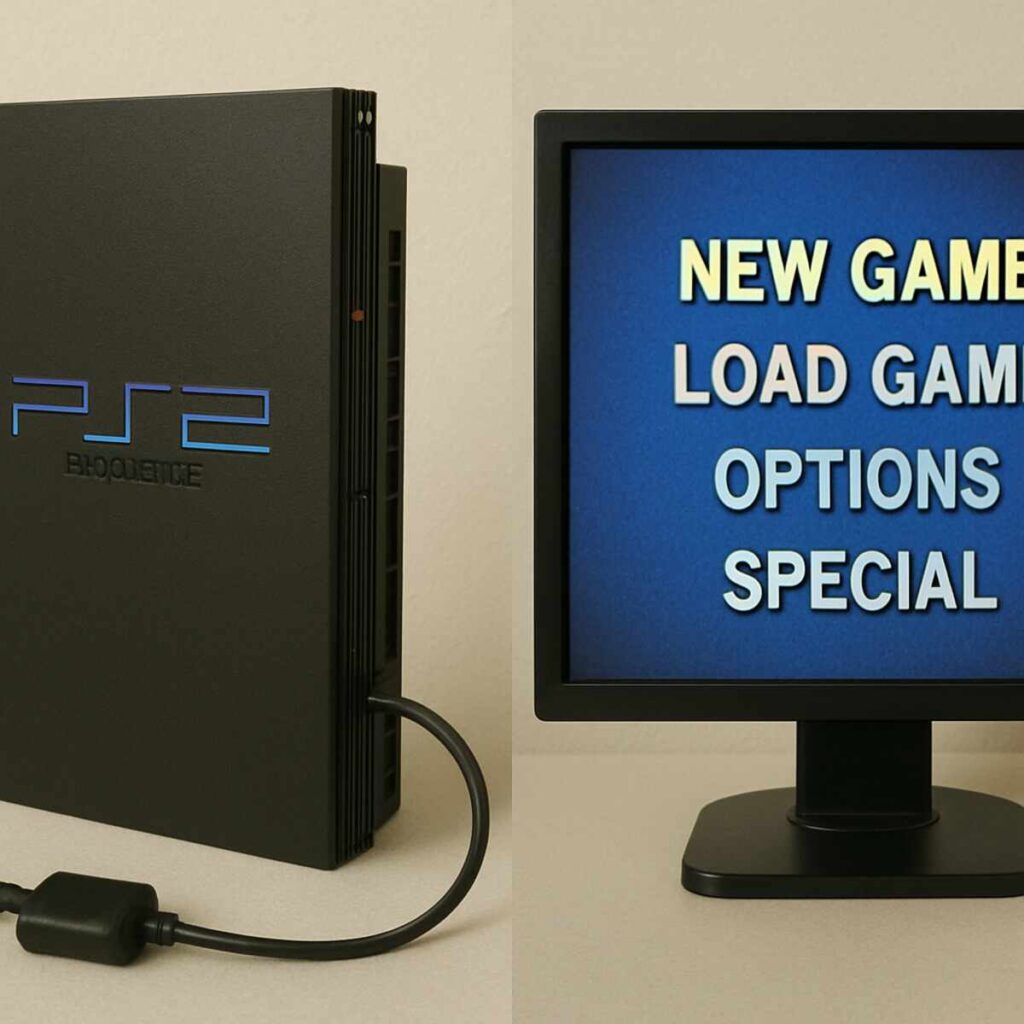
Deciding between original hardware or a PC emulator is the first major fork in the road. For tactile authenticity, nothing replaces a DualShock 2 controller and the whir of a spinning disc. However, using original hardware often requires “tunneling” software like XLink Kai. This runs on a computer on your network, tricking your PS2 into believing global players are connected via a local System Link cable. This is essential for games that lost official servers but support local LAN play.
![Image: A split screen visual: On the left, a PS2 console with a cable; on the right, a desktop computer monitor showing a game menu.]
Purists stick to the console to avoid graphical glitches, but they face hardware maintenance. Twenty-year-old lasers and capacitors fail, and connecting a PS2 to a 4K TV often results in a muddy image without upscaling. This drives many toward PC emulation software like PCSX2, which simulates both the game and the networking hardware.
Emulation offers a distinct advantage through “Netplay.” While standard online play connects to a central server, Netplay synchronizes two emulators directly. This means titles that never had online capabilities—like Tekken 4 or split-screen shooters—can be played with a friend remotely. The emulator effectively stretches the controller cord across the internet.
The choice between XLink Kai and PCSX2 Netplay depends on the goal. XLink Kai is best for accessing larger lobbies in games designed for system-link parties. Netplay is better for intimate, low-latency sessions in fighting games or cooperative modes. However, emulation requires a powerful PC; if the computer struggles to maintain speed, the connection desynchronizes.
The Metal Gear Online Revival: Reclaiming the Stealth-Action Throne
While many online games focused on chaotic shooting, Metal Gear Solid 3: Subsistence introduced a cerebral multiplayer mode in 2006. Metal Gear Online (MGO) translated trademark stealth mechanics into a competitive arena where being seen meant death. Success demanded patience, utilizing cardboard boxes and distractions. The official servers shut down just a year after launch, leaving the mode unplayable for over a decade.
Resurrecting this required a complete reconstruction of the server infrastructure. The “Save MGO” community reverse-engineered the network traffic to understand how the PS2 communicated with Konami’s computers. Through years of trial and error, programmers tricked the game disc into accepting a modern, fan-run server as the official source.
Participating today is accessible. To play MGO, you typically need to patch your game file (ISO) or adjust DNS settings to point toward community servers. The “Save MGO” website hosts the necessary files and guides. Once connected, players find lobbies complete with working stats, clans, and the camaraderie of a community united by preservation.
Your 2024 PS2 Online Launch Checklist
The PlayStation 2 is no longer just a relic gathering dust; it is a portal to an active digital underground. The history of PS2 online games proves it was the prototype for the connected world we inhabit today. You now possess the knowledge to bridge the gap between 2002 hardware and modern infrastructure.
Reviving your console is more approachable than navigating a modern account setup:
- Confirm Hardware: Ensure you have a “Fat” PS2 with a Network Adapter or a Slim model with the built-in Ethernet port.
- Connect Physically: Run an Ethernet cable from your router to the console.
- Change the Address: In the network configuration menu, set your DNS to a fan-server address to bypass the shut-down official servers.
- Find the Players: Join community Discords like “PS2 Online” to coordinate match times.
While technology makes the connection possible, the community makes it worth the effort. Fan-run servers rely on scheduled game nights, so syncing up via Discord is essential. Regarding your gear, remember that twenty-year-old hardware needs care. Keep your console well-ventilated to ensure it survives its second life on the web.
There is a distinct magic in watching the “Connecting…” bar fill up on a CRT TV today. Seeing that “Welcome” message validates that the past isn’t dead; it’s just been waiting for the right IP address. Dust off the controller, plug in the cable, and step back into the lobby—your squad is waiting.