










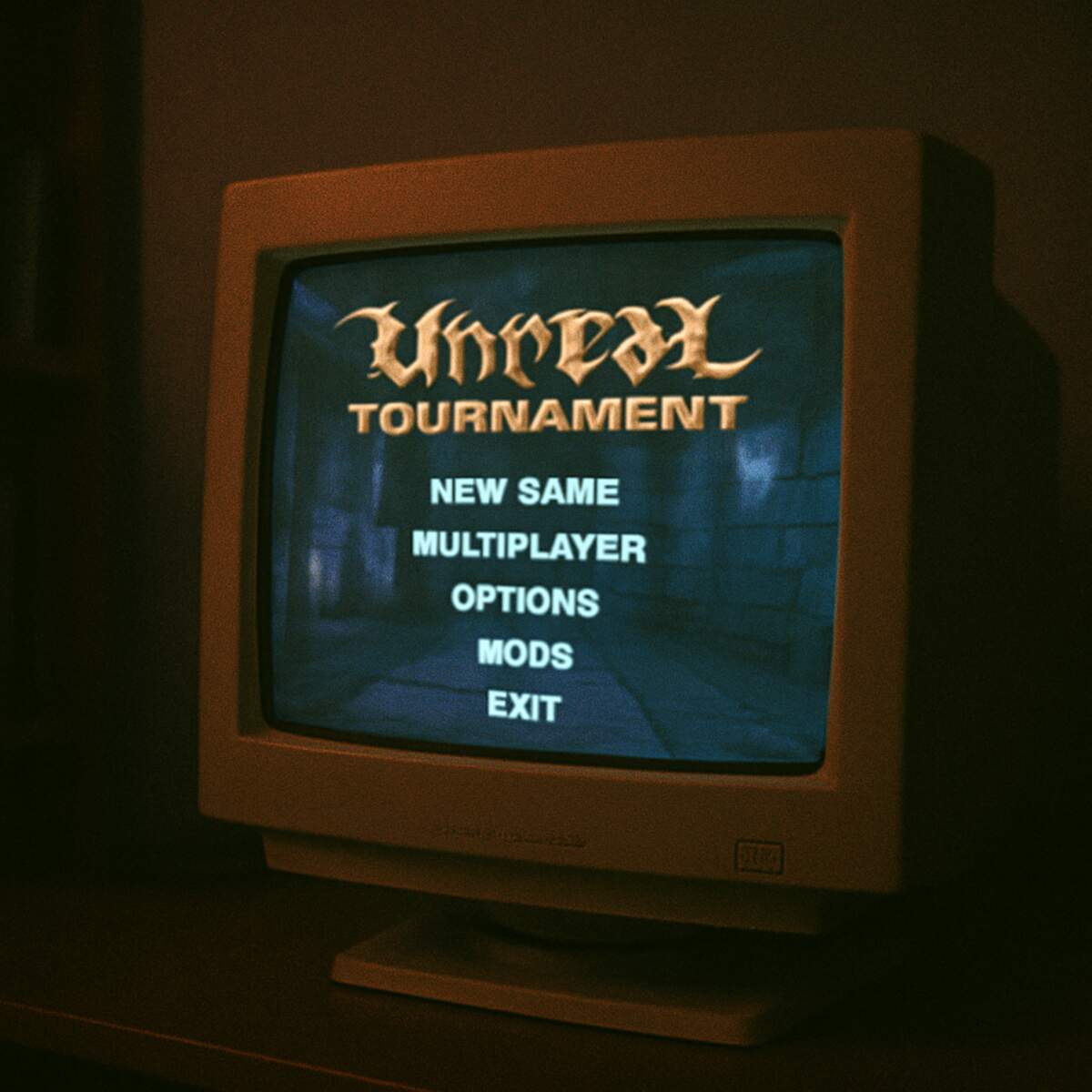
Today, jumping into a game of Fortnite or Call of Duty is seamless. You press a button, and seconds later, an algorithm finds you a match with players from around the world. It’s fast, efficient, and impersonal. But what if finding the game was part of the game itself? In the early 2000s, this was the reality for a generation of gamers. You weren’t just dropped into a lobby; you were given a map to a thousand different digital street corners, and it was your job to find one you wanted to call home. To learn more, check out lenzo
Instead of automatic matchmaking, players navigated a “server browser”—essentially a giant, chaotic list of every game currently running, hosted by other people. This was the entry point into the wild history of online multiplayer FPS, for foundational titles like Quake III Arena, Unreal Tournament, and even the bizarrely charming shooter known as the Dolls online game. Choosing a server wasn’t just about finding low latency; it was about choosing a destination. You were looking for a community.
Because these servers were run by players, not corporations, they developed distinct personalities. Some were fiercely competitive training grounds for organized teams, while others were laid-back hangouts with absurd rules like “pistols only.” Finding your favorite server was like discovering your regular spot at a neighborhood bar, complete with its own inside jokes and local legends. For many people wondering what happened to these early 2000s online games, the answer lies in the slow disappearance of these player-owned worlds, which were often the only places they ever truly existed.
This “anything goes” attitude extended beyond just house rules. The era’s supposed clunkiness and technical glitches often became features, creating high-skill mechanics that developers never intended. This journey isn’t just about nostalgia; it’s about uncovering a lost world of player-driven communities and discovering what we gained—and what we might have lost—when the internet decided to make everything a little easier.
How players found games before matchmaking, what ‘ping’ meant for your experience, and why server names told a story
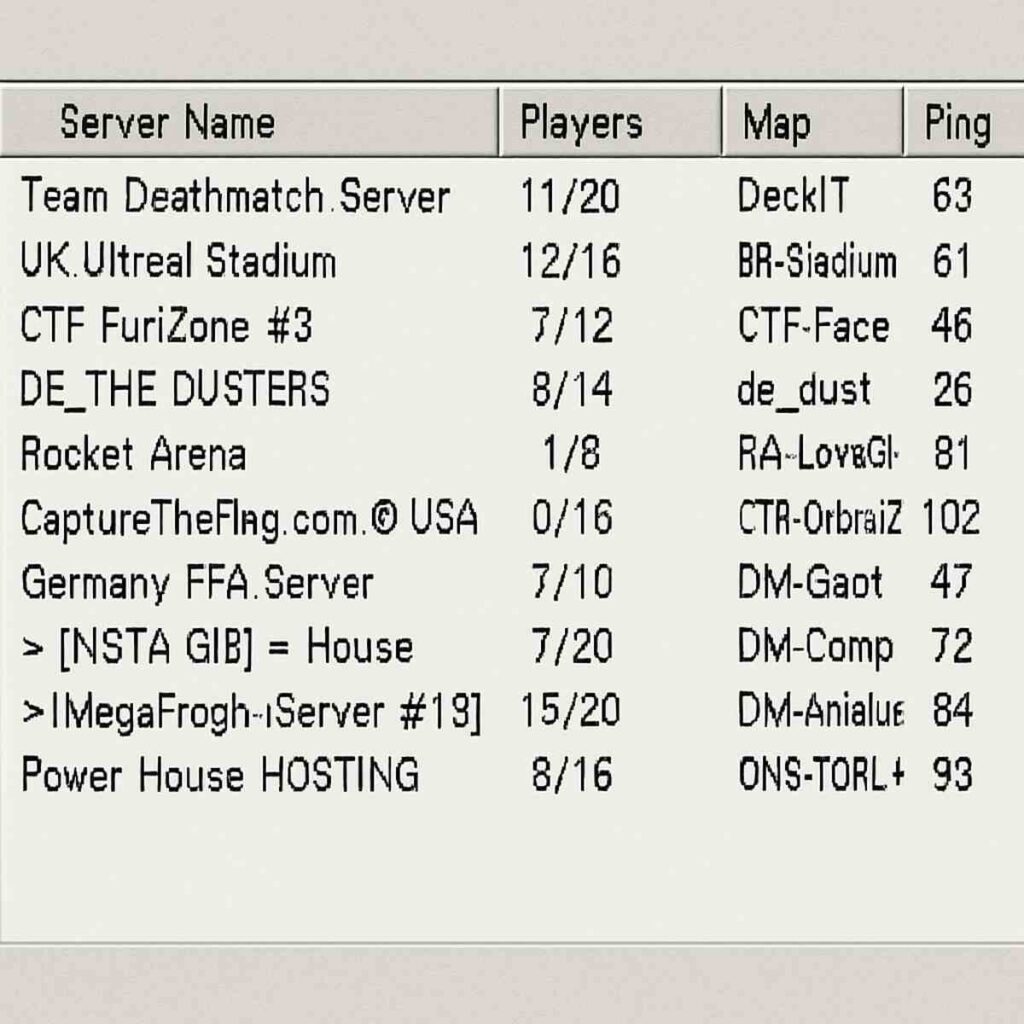
In the era of games like Dolls, finding a match was a deliberate act. You used a server browser, a live directory of every game happening at that moment. This list showed the server’s name, the map being played, the player count, and most critically, your “ping.”
Of all the information on that screen, ping was the most important. Ping, also known as latency, is the time it takes for your computer to “talk” to the game’s server. Think of it like the delay on a long-distance phone call. A low ping (under 50ms) was like a crystal-clear conversation, where your actions felt instant and responsive. A high ping, however, meant players would stutter and teleport across the screen, turning a fast-paced shooter into an unplayable slide show. Gamers would obsessively sort the list to find the servers with the lowest ping possible.
Beyond the technical data, the server names themselves told a story and acted as a storefront for the community inside. You weren’t just joining a random game; you were choosing a specific vibe. These names often used tags to advertise their rules or culture:
- [24/7] Dust Palace: This server ran the same popular map, Dust Palace, all day, every day.
- Pistols Only | Noobs Welcome: A perfect spot for new players to practice without being dominated by veterans.
- [Clan-TT] Tryout Server: This was an arena for a competitive team, or “clan,” to recruit new members.
This list wasn’t just a way to find a match; it was a directory of digital neighborhoods, each waiting to be explored.
Why Your Favorite Server Was More Like a Clubhouse Than a Video Game Match
Those digital neighborhoods weren’t just a marketing gimmick; they were real places. Unlike today, where most games are hosted on massive, official company servers, the servers for games like Dolls were often run by the players themselves on their own computers. This crucial difference meant that a server could develop a genuine personality. Finding a good one felt less like joining a random match and more like discovering a favorite local coffee shop—a place with its own regulars, inside jokes, and distinct atmosphere. You didn’t just play the game; you became part of a specific server’s community.
Over time, the regulars on these servers often formed organized groups called clans. Think of a clan not as a professional esports team, but more like a neighborhood bowling league. They were social circles first and competitive units second. Clans would practice together, put their unique tag in front of their username (like [Clan-TT]PlayerName), and defend their home server’s reputation against visiting rivals. Joining a clan was a rite of passage, transforming you from a random player into a recognized member of a tribe.
Presiding over this entire ecosystem was the server admin—usually the person paying for and running the server. They were the owner, bouncer, and event planner all rolled into one. A good admin was a benevolent caretaker who would kick cheaters, organize “pistols only” nights for fun, and keep the peace. A bad admin, however, could be a petty tyrant, banning players who were better than them or changing the map right as you were about to win. This human element added a layer of wild, unpredictable drama that automated systems simply can’t replicate.
Ultimately, this structure meant that your experience wasn’t defined solely by the game’s official rules, but by the culture you chose to join. Finding your “home” server gave you a social anchor in the digital world. Once you had your clubhouse and your crew, the only thing left to do was master the strange and often broken physics of the game itself.
The Beautiful Glitches: How “Broken” Mechanics Became High-Level Skills
While finding a community was half the battle, the other half was mastering a game that often seemed to play by its own unwritten rules. In today’s polished shooters, bugs are typically annoying problems that developers rush to fix. But in the era of Dolls and its peers, players discovered that some “glitches” in the game’s physics weren’t problems at all—they were opportunities. These happy accidents, known as emergent mechanics, were techniques never intended by the developers but were embraced by the community and transformed into essential, high-level skills.
Perhaps the most famous of these discoveries was the rocket jump. The logic was simple, if brutal: if you aimed a rocket launcher at your own feet and fired as you jumped, the resulting explosion would launch you vertically or across the map at incredible speed. This wasn’t a free ride, of course; you sacrificed a huge chunk of your health for this burst of mobility. But it was a worthy trade-off to reach a sniper perch, grab a power-up before anyone else, or escape a fight you were about to lose. It was the ultimate high-risk, high-reward maneuver that became a spectacular cornerstone of the genre.
A more subtle, but equally important, technique was a form of movement players nicknamed bunny hopping. By chaining together a series of perfectly timed jumps while moving sideways (strafing), players found they could break the game’s normal running speed limit. Instead of running, you would see veterans gliding across the floor, building momentum with each hop until they were moving far faster than a new player could ever hope to on foot. Mastering this rhythmic, flowing movement was incredibly difficult, but it was the clearest sign you were no longer a rookie.
These skills were more than just clever tricks; they formed the very soul of competitive play. They created a massive “skill gap,” where the difference between a new player and a veteran wasn’t just better aim, but a complete mastery over a hidden layer of movement. The long journey to learn these techniques was what made the games so rewarding and gave them lasting depth. This entire philosophy of movement became a defining feature of the era, and the subtle differences in how games handled it would eventually ignite one of gaming’s first great rivalries.
The Great Arena War: What Made Quake 3 and Unreal Tournament 2004 Different?
This deep focus on movement and player-driven skill created a fork in the road for game developers, leading to one of the first great rivalries in online gaming: the battle between Quake III Arena and Unreal Tournament 2004. While they looked similar on the surface, these two titles were two of the best arena FPS games of the 2000s because they represented fundamentally different philosophies. Deciding between Quake 3 vs Unreal Tournament 2004 was like choosing between a stripped-down race car and a heavily armed monster truck.
Quake III Arena, which ran on the legendary id Tech 3 engine, was the genre refined to its purest form. It was a brutal, high-speed digital sport. The game’s physics were tight and predictable, making complex skills like strafe-jumping the absolute key to victory. Weapons like the Railgun and Rocket Launcher were precise instruments of death that demanded perfect aim and timing. The maps were often grim, industrial arenas built specifically for fast duels and acrobatic combat. For players who loved pure speed and the thrill of outmaneuvering an opponent in a one-on-one fight, Quake was the undisputed king.
If Quake was a precise fencing match, then Unreal Tournament 2004 was a chaotic bar fight. It was a sprawling sandbox of sci-fi mayhem. While it also featured fast movement, it added a “dodge-jump” that was easier to learn, making the game more accessible. Its true identity came from its wild weapon variety—from the bouncing shrapnel of the Flak Cannon to the screen-clearing Redeemer nuke—and its ambitious game modes. UT2004 introduced massive maps with vehicles, turrets, and team-based objectives in modes like Onslaught, turning simple shootouts into large-scale strategic battles.
Ultimately, the choice came down to what kind of experience you were looking for. Both were masterpieces, but they catered to different tastes, creating a division that fans still debate today.
- Quake III Arena: A pure, competitive sport focused on speed, precision aim, and mastering movement glitches.
- Unreal Tournament 2004: A vast, chaotic sandbox filled with diverse weapons, vehicles, and sprawling team-based game modes.
These giants defined the peak of the genre, but what about the smaller, quirkier games like Dolls? While the titans battled for supremacy, many community-driven games simply faded away.
A Digital Ghost: What Really Happened to the “Dolls” Online Game?
Unlike the titans we just discussed, games like Dolls never achieved a massive player base. For any online multiplayer game, this is a fatal problem. They need to maintain a “critical mass” of players—a term for the minimum number of people required to keep the game alive and fun. Think of it like a party: even the best venue is a dud if only three guests show up. As players naturally drifted toward the bigger arenas of Quake and Unreal Tournament, the servers for Dolls grew quiet. Finding a full match went from being easy to being a rare treat, pushing even dedicated fans away and speeding up the game’s decline.
This player-driven decline often triggered a final, decisive blow from the publisher. When a game like Dolls stopped being profitable, the company behind it would eventually shut down the official online services needed to run it. The game was now effectively abandonware, a digital ghost. You might still own the game disc, but with no official support, finding other players became nearly impossible. This is precisely what happened to the Dolls online game; it wasn’t a single dramatic event, but a slow fade into obscurity, ending with the flick of a switch in a server room.
The fate of Dolls highlights a harsh truth about that era: many of these online worlds were incredibly fragile. Their existence depended entirely on active players and continued corporate support. When either of those vanished, so did the game, leaving behind a trail of lost online games from the 2000s that can never be played as they were intended. But the problem was even bigger than a single publisher abandoning a single game. What would happen if a core piece of technology that connected players in thousands of different games was suddenly turned off for good?
What GameSpy was and why it was essential, the impact of its 2014 shutdown, and how it was like a phone book for thousands of games becoming useless overnight
That exact scenario played out on a massive scale. The technology that powered the server browser for thousands of different games, from blockbusters to forgotten gems like Dolls, was often a single service called GameSpy. Think of it like this: if each community-run game server was a house with a phone line, GameSpy was the company that printed the phone book for the entire country. The server browser in your game would ask GameSpy, “Who’s online right now?” and GameSpy would provide that giant list. Without it, you had no way of knowing who to call, even if thousands of servers were still running and waiting for players.
Then, in 2014, the unthinkable happened. The company that owned GameSpy shut the service down for good. Overnight, the phone book for a decade of online gaming was set on fire. The GameSpy shutdown impact on classic games was catastrophic. Titles from major publishers, like Star Wars: Battlefront, Battlefield 2, and even the original PC version of Halo: Combat Evolved, suddenly lost their official online functionality. The server browsers inside these games returned empty lists. From the player’s perspective, it was as if thousands of active communities had simply vanished into thin air, making it seem like these old games don’t work anymore.
The shutdown was a devastating lesson, revealing the hidden fragility of the era’s online ecosystem. A system that felt wonderfully decentralized, with its thousands of community-run servers, was ultimately dependent on a single, centralized point of failure. When that linchpin was removed, the entire network collapsed. For many lesser-known titles, this was a final, digital extinction event. But for the most dedicated communities, it wasn’t an ending. It was a call to arms, sparking a grassroots effort to rebuild the phone book from scratch.
The Resurrection: A 3-Step Guide to Playing Classic Shooters in 2024
The collapse of GameSpy felt like a death sentence, but for the most beloved games of the era, it was more like a hibernation. While the original companies moved on, passionate fan communities picked up the torch. Thanks to their incredible work, playing a classic like Dolls or Quake III Arena today isn’t just possible—it’s often a better experience than it was two decades ago. If you want to dive in, the process of how to play old PC shooter games on modern systems boils down to three key steps.
First, you need a legal copy of the game’s original files—the art, the maps, the sounds. Your best bet is a digital storefront like GOG.com or Steam. Many gamers prefer GOG because their versions are DRM-free, meaning they don’t have digital locks that can sometimes complicate modding. Think of it as buying a car with the keys and the hood unlocked, giving you the freedom to tinker with the engine. Steam works perfectly fine too, but GOG’s philosophy often makes the next steps a little smoother.
With the game’s data secured, your next move is to find a Source Port. This is the single most important step. A source port is essentially a brand-new, modern game engine built by the community to run a classic game. Imagine dropping a 2024 Tesla motor into the body of a 1969 Mustang. The classic look and feel remain, but it runs beautifully on modern hardware. These ports add support for high resolutions, widescreen monitors, and better mouse controls, rescuing the game from a tiny, pixelated window. Better yet, most source ports for games like Quake III (such as the famous ioquake3 engine) already include the fix for the server browser, automatically pointing the game to a new, community-run “phone book” to replace the defunct GameSpy.
Once you install a source port—which is usually as simple as dragging and dropping its files into your game’s folder—the resurrection is complete. You can launch the game, and that once-empty server list will spring to life, populated with a small but dedicated group of veterans keeping the lights on. The result is a classic title, preserved and enhanced, running flawlessly on a machine its original creators could have only dreamed of. This incredible grassroots effort begs the question: is anyone making games like this anymore?
Is Anyone Making Games Like Unreal Tournament Anymore?
The short answer is yes, but with a significant catch. In recent years, a small but passionate “retro FPS revival” has seen indie developers attempt to resurrect the blistering speed and high-skill-ceiling action of the classic arena shooter. These games are a direct love letter to the era of Quake and Unreal Tournament, built by veterans who miss the raw, twitch-based competition that defined early online play. The challenge they face, however, is that the very things that made those classics beloved—a steep learning curve and a punishing environment for newcomers—are a tough sell in today’s market.
Modern blockbuster shooters like Call of Duty or Apex Legends have largely been designed to be more welcoming. They often feature systems where players earn new weapons and abilities over time, or mechanics that give a struggling player a chance to score a lucky win. In contrast, the classic arena shooter philosophy is one of stark, unforgiving equality. Everyone starts with the same basic tools, and success comes purely from mastering the game’s demanding movement and knowing the map better than your opponent. It’s an incredibly rewarding model for dedicated players, but it can feel like hitting a brick wall for those just starting out.
Despite this commercial hurdle, several excellent spiritual successors carry the torch. Games like Toxikk explicitly market themselves as a return to the ’90s arena, complete with rocket jumps and a “no-classes, no-perks” mantra. The more recent Diabotical was created by a former Quake professional and is laser-focused on delivering a polished, modern competitive experience in the same classic mold. Perhaps the most well-known is Splitgate, which brilliantly combined the feel of an old-school shooter with a mind-bending portal mechanic, creating something both familiar and refreshingly new.
While these dedicated revivals struggle to capture a mainstream audience, they prove the genre is far from dead. More importantly, they show that the core principles of the classic era—speed, player skill, and map control—are still compelling. And even if you don’t see a new Unreal Tournament topping the charts, its DNA is hiding in plain sight, echoing in the design of some of today’s biggest games.
The Echo in the Machine: Why the Spirit of 2000s Shooters Is Everywhere
The early 2000s internet may seem like a forgotten, pixelated landscape, but its clunky interfaces and chaotic server lists provided the blueprint for modern gaming. That world was shaped as much by the players as by its creators, and a server browser wasn’t just a menu but a map to a thousand digital clubhouses.
That player-driven spirit wasn’t a temporary quirk; it was a creative engine whose influence is still felt today. The same energy that fueled modding scenes in arena shooters directly inspired the creation of Defense of the Ancients—the fan-made mod that spawned the entire multi-billion dollar MOBA genre. Those early, competitive clans fighting for bragging rights were the direct ancestors of today’s professional esports teams. This is the profound legacy of arena shooters: a direct line from mods to MOBAs, from community passion to global spectacle.
These games are not obsolete artifacts, but living museums. The best way to truly grasp this history of online multiplayer FPS is to experience it. Find a guide, fire up one of these classic titles, and jump into a community-run server. Don’t just play a match; look for the server rules, the custom maps, the veteran player gliding across the map with impossible skill. You aren’t just playing an old game—you are visiting the foundational bedrock of online community, creativity, and competition that still defines how we play today.
