







Have you ever tried to watch a video on TikTok, only to see the frustrating message: “This content is not available in your region”? Or perhaps you’ve wondered how online ads seem to know your city. The answer to both lies in a unique digital identifier that every internet-connected device has. The best guide to finding residential proxies.
This identifier is called an IP address, and the simplest way to think of it is as the mailing address for your computer. When you visit a website, that site reads your IP address to know where to send back the images, text, and videos you’ve requested. In practice, this process also reveals your general location to every site you connect with.
Social media platforms rely heavily on this information. They use your IP address not only to customize your feed with local content but also to enforce regional rules. While this can sometimes be helpful, it creates a direct link between your online profile and your physical location, raising important questions about social media privacy.
What if you could control which address websites see? A simple but powerful tool makes this possible, creating a buffer that allows for greater social media anonymity. By acting as a middleman, it swaps your real IP address for a different one, giving you back control over your digital location and strengthening your privacy online.
What Is a Proxy? Your Internet’s ‘Mail-Forwarding Service’ Explained
Think of your IP address as the mailing address for your device on the internet. When you visit a website like Instagram, it needs your address to know where to send back the photos, videos, and comments you want to see. This IP address also reveals your general location, like your city and country. But what if you didn’t want to share that personal address directly?
In the real world, you might use a mail-forwarding service. You’d send your package to the service, they would put a new label on it with their address, and then they would send it to the final destination. The recipient only ever sees the address of the forwarding service, not your home. A proxy server does this exact job for your internet traffic. It’s a “middleman” computer that sits between you and the websites you visit.
The process is straightforward: instead of connecting directly to a social media app, your device first connects to the proxy server. Then, the proxy server connects to the app on your behalf. As a result, the app never sees your personal IP address. It only sees the IP address of the proxy server. If that proxy server is located in London, websites will treat you as if you are browsing from London.
At its core, a proxy is an intermediary that masks your digital identity and location. It forwards your requests and sends back the replies, creating a simple but effective buffer between you and the rest of the internet.
Top 3 Reasons People Use Proxies with Social Media
For social media users, from casual browsers to small business owners, using a proxy comes down to controlling your digital identity. It’s not about being deceptive; it’s about choosing what information you share and what digital world you want to see. The benefits of using a proxy for platforms like Facebook or TikTok range from enhancing privacy to unlocking a whole new level of functionality.
On a basic level, using a proxy prevents social media platforms from pinpointing your location through your IP address, adding a welcome layer of privacy. The more exciting part is what this enables. Have you ever wanted to see what’s trending on TikTok in Japan or what Instagram ads look like to someone in New York? By connecting through a proxy server in that location, you can effectively “teleport” your digital self to access content and trends that are normally hidden from you. This gives you a global perspective right from your screen.
Social media platforms are also incredibly smart. They use your IP address, browser cookies, and device information to understand who you are. This is why when you create a new “business” account, it often gets suggested to your personal friends. For creators, marketers, or anyone needing a true separation, this is a problem. A proxy provides a solution. By running a second account through a different proxy, you’re giving it a completely separate digital identity. This is a core part of any modern guide to managing multiple social media profiles safely, ensuring your hobby page doesn’t get linked to your personal life.
People use proxies with social media to:
- Enhance Personal Privacy: Stop platforms from tracking your physical location.
- Access Geo-Restricted Content: See posts, trends, and features from other countries.
- Safely Manage Multiple Profiles: Keep business, hobby, and personal accounts separate.
While this functionality is similar to what a VPN does, their differences are crucial, especially for social media.
Proxy vs. VPN: What’s the Real Difference for Social Media?
The idea of hiding your IP address might sound familiar, especially if you’ve ever seen an ad for a VPN (Virtual Private Network). On the surface, proxies and VPNs seem very similar—both act as a middleman to protect your online identity. But the way they do it, and what that means for managing your social media, is where they diverge. Understanding this difference is key to choosing the right tool for the job.
The biggest distinction comes down to scope. A VPN is like a full-service privacy makeover for your entire device. Once you turn it on, all your internet traffic—from your web browser to your email app to your background updates—is routed through the VPN server. It’s an excellent all-or-nothing approach to privacy. In contrast, a proxy is more like a specialized tool. You can set it up to work only with a specific application, like just your Chrome browser, while leaving everything else to use your regular internet connection.
This is the game-changer when it comes to social media anonymity and management. If you use a VPN to run two different Instagram accounts on your computer, both accounts will appear to come from the same IP address—the VPN’s. Social media platforms can easily link them. However, with proxies for social media accounts, you can assign a unique proxy to each account. One account can look like it’s browsing from Chicago, while the other looks like it’s in Miami. This granular control is what allows for true separation.
A VPN is for protecting your entire digital life, while a proxy is for managing specific digital tasks. For general browsing privacy, a VPN is fantastic. But for the targeted work of managing multiple social media profiles or conducting regional research, the precision of a proxy is unmatched.
The Common Choice: What Are Datacenter Proxies?
When you start looking for a proxy, the most common and affordable type you’ll find is a datacenter proxy. These proxies don’t come from a typical home internet connection provided by companies like Comcast or AT&T. Instead, their IP addresses are created in bulk inside massive, powerful data centers—the same server farms that host websites and cloud services. Think of a datacenter proxy’s IP address as coming from a huge, commercial office building. It’s an effective address, but it’s clearly not a home.
The main appeal of datacenter proxies is their speed and low cost. Because they are generated so efficiently and have access to tremendous bandwidth, they are often the go-to choice for tasks where getting flagged isn’t a major concern. However, that “office building” address is also their biggest weakness when it comes to social media. Sophisticated platforms like Facebook and Instagram are experts at identifying IP addresses that belong to data centers, as they know real users don’t browse from them.
For this reason, using a datacenter proxy to manage a social media account is a gamble. Traffic from a data center often looks automated or inauthentic to these platforms, raising an immediate red flag that can lead to security checks, feature blocks, or even an outright ban. If the most common proxies are too risky, a safe alternative is needed—one that looks completely human to any website.
The Gold Standard: Why Residential Proxies Rule Social Media
Where datacenter proxies use an “office building” address, a residential proxy takes the opposite approach. It provides you with an IP address that belongs to a real home, just like yours. This address is borrowed from an actual device connected to a standard home internet plan, making your connection appear as if you’re browsing from a living room couch rather than a server farm. Instead of looking like a business, you look like a neighbor.
The source of this trust comes from where the IP address originates: a legitimate Internet Service Provider (ISP). These are the familiar companies like Verizon, AT&T, or Comcast that deliver internet to millions of homes. When a social media platform sees traffic coming from an ISP-issued address, it has every reason to believe it’s a real person. There are no alarm bells, because the connection looks completely organic and indistinguishable from any other regular user on their network.
This inherent legitimacy is precisely why residential proxies are considered the safest and best social media proxies available. When your online activity blends in perfectly with millions of other genuine users, your account is far less likely to face verification loops, feature restrictions, or suspensions. For anyone serious about managing a social media presence—whether for a business, research, or simply maintaining multiple profiles—this level of camouflage isn’t just a benefit; it’s a necessity.
Ultimately, the difference between residential vs datacenter proxies for social media is the difference between blending in and standing out. While a datacenter proxy announces its presence, a residential proxy quietly slips into the crowd, earning it the title of the “gold standard.”
The Specialist: When to Use a Mobile (4G/5G) Proxy
Think about how you use social media. Chances are, you’re scrolling through your phone, not sitting at a desktop computer. Platforms like Instagram and TikTok are built for mobile devices first, and they are incredibly good at telling where their users are connecting from. If a residential proxy makes you look like a neighbor, a mobile proxy makes you look like someone standing right next to them, scrolling on their phone.
A mobile proxy, also known as a 4G or 5G proxy, gives your connection an IP address directly from a mobile carrier’s network—think Verizon, AT&T, or T-Mobile. This is the most authentic and trusted type of IP address you can get. Because millions of real mobile users are constantly connecting and disconnecting from these same networks, your activity becomes a needle in a massive, ever-shifting haystack. For a social media platform, it’s virtually impossible to distinguish your proxy-based activity from that of a regular user on their data plan.
This level of authenticity is crucial for the most sensitive social media tasks. For mobile-first apps, using a mobile proxy is a game-changer. These are often considered the best mobile proxies for TikTok automation because the app sees traffic coming from its natural environment: a cellular network. Similarly, using a 4G proxy for account creation can significantly reduce the chances of immediate flags or verification requests, as you look just like any other new user signing up from their phone.
While residential proxies are the workhorse for most tasks, mobile proxies are the specialists you call in for the highest-stakes operations on platforms that live on our phones. They provide unparalleled trust when it matters most.
The One-Proxy-Per-Profile Rule for Safe Account Management
Whether you’re using a residential or a mobile proxy, the most important strategy for safety comes down to a simple, non-negotiable rule: one proxy for one social media profile. Think of each proxy as giving an account its own unique digital home. If you are running multiple accounts for your business or creative projects, this separation is the single most effective way to keep them secure and independent from one another. This principle is the cornerstone of any reliable guide to managing multiple social media profiles.
To understand why this is so critical, you need to see things from a platform’s perspective. Imagine several accounts—each with a different name and purpose—all logging in from the same IP address. To a platform like Instagram or Facebook, this is a huge red flag. They immediately link these accounts together, assuming they are all operated by the same person. If one of those accounts gets flagged for any reason, the platform can penalize all of them in a chain reaction. This is how one mistake can bring down your entire network of profiles.
This is where the concept of a dedicated IP becomes crucial. When you use a dedicated IP proxy, you are the only person using that specific IP address. It’s like having a private, unlisted phone number instead of a shared house phone. Because no one else can use it, its reputation stays clean; you are in complete control. Using a dedicated IP for social media management ensures that the actions of one account can never impact another, helping you avoid a social media IP ban that could lock you out entirely.
Ultimately, assigning one dedicated proxy to each profile builds a consistent and believable history for that account. Over time, the platform learns to trust that this profile always connects from its unique “home,” making its activity look completely natural. This long-term consistency is just as important as the proxy type you choose.
How to Unblock and View Social Media From Anywhere
Beyond managing multiple profiles, one of the most powerful uses for a proxy is its ability to bypass frustrating geo-blocks. Have you ever clicked on a trending video only to be told, “This content is not available in your region”? This happens because websites read your IP address to determine your location and then filter what you can see. Using a proxy is like having a digital passport; by connecting through a server in another country, you can effectively teleport your online presence. The website sees the proxy’s London IP address instead of yours in Chicago, and suddenly, you have access to UK-exclusive content.
This opens up a new world of content consumption and research. For anyone curious about global trends, proxies for social media accounts allow you to see what’s on TikTok’s “For You” page in Tokyo or what news is trending on Twitter in Berlin. The process is simpler than it sounds; you don’t need to be a tech expert to figure out how to set up a proxy for Twitter, you just need to choose one in your desired location. This same principle helps people on restricted networks, which is why students and employees often search for ways to unblock social media at school or the office to access their feeds during a break.
For businesses, this capability is an essential market research tool. A small e-commerce brand in the United States can use a proxy to view Instagram and Facebook as if they were a user in Australia. This allows them to study local competitors, see which ads are resonating with an Australian audience, and understand regional trends without ever leaving their desk. It’s a simple, effective way to gain a global perspective.
The Red Flag: Why You Absolutely Must Avoid ‘Free’ Proxies
The promise of a ‘free’ solution is always tempting. After learning what a proxy can do, your first instinct might be to search for a free service to try it out. This is a critical mistake. When it comes to proxies, the old saying holds: if you’re not paying for the product, you are the product. Running servers costs money, and free providers have to pay their bills somehow—usually at the expense of your privacy and security.
Think back to the mail-forwarding service analogy. A trustworthy, paid proxy service is like a professional courier that forwards your mail without ever looking inside. A free proxy, however, is a service that opens every letter, copies your passwords and private conversations, and then sells that information to the highest bidder. These free social media proxy risks are not just theoretical; providers of free services often engage in data logging, recording every site you visit and every piece of information you type, including your social media logins.
Beyond simply stealing your information, many free proxies can actively alter the data you receive. Because they control the connection between you and the website, they can inject their own code into the sites you visit. This might show up as annoying pop-up ads, but it can be far more sinister. Some will redirect you to phishing sites or even install malware directly onto your device, turning your quest for privacy into a security nightmare.
Using a free proxy puts you at risk of:
- Data Theft: They can record and sell your usernames, passwords, and private messages.
- Malware Injection: They can infect your computer with viruses or malicious software.
- Poor Performance: They are incredibly slow and unreliable because they are shared by thousands of other users.
- Getting Banned: They are almost always already known and blocked by major sites like Instagram and Facebook, making them useless.
A quality proxy is a safe and effective tool, but only when you use a reputable, paid provider. The small fee for a private proxy is an investment in your own security and ensures you can achieve true social media anonymity without compromising your accounts.
A Simple Guide: How to Set Up Your First Proxy
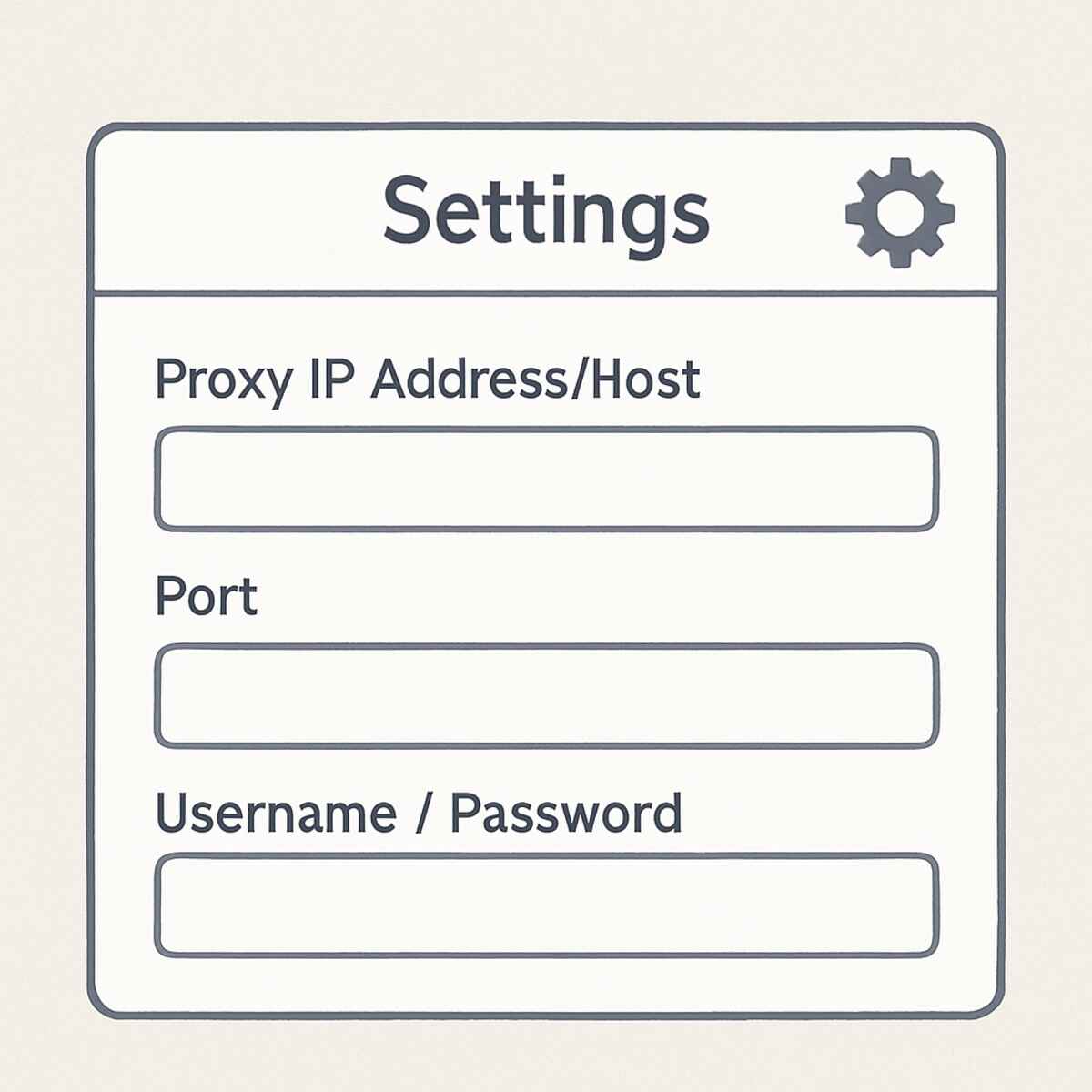
After deciding to invest in a safe, private proxy, you might think the setup process will be complicated. The good news is that it’s far simpler than it sounds. If you can log into a new email account, you have all the skills you need. Setting up a proxy doesn’t involve any complex coding; it’s mostly about copying and pasting three pieces of information into the right boxes.
When you purchase a proxy from a reputable provider, they will give you a specific set of “keys.” Think of it like a secure mailing address. You’ll receive:
- The proxy server’s address (the street address).
- A port number (the specific apartment or suite number).
- Your unique username and password (the key to the door).
These three pieces of information are all you need. You simply enter them into your chosen software, and it handles the rest of the connection for you.
While you can input these details into your computer’s system-wide settings, the easiest and most recommended method for beginners is to use a browser extension. Extensions like FoxyProxy or SwitchyOmega are designed specifically for this purpose. The major advantage of this approach is that the proxy only affects the traffic within that specific web browser. This is a core strategy in any good guide to managing multiple social media profiles; you could have one browser with a UK proxy for Instagram to check London trends, while your main browser for banking and email remains on your normal, direct connection.
Ultimately, using an extension gives you effortless control. Most offer a simple on/off button right in your browser’s toolbar, allowing you to activate or deactivate the proxy with a single click. This makes it easy to switch between your real location and your proxy’s location whenever you need to.
How to Choose a Reputable Proxy Provider: 4 Key Questions to Ask
A quick search for a proxy provider reveals a dizzying number of options, all promising speed, privacy, and reliability. Unfortunately, not all providers are created equal. Using a low-quality or untrustworthy service can be worse than using no proxy at all.
To cut through the noise, ask these four simple questions. The answers will tell you everything you need to know about whether a provider is worth your time and money.
1. What types of proxies do they offer? A reputable provider will specialize in residential proxies for social media and mobile proxies. As discussed, these use IP addresses from real home internet connections, making them look completely legitimate to sites like Instagram and Facebook. If a provider only pushes cheap datacenter proxies, they likely aren’t focused on the security and stability needed for social media management.
2. Is their pricing clear? Look for transparency. The best social media proxies are typically sold based on usage, much like a cell phone data plan (e.g., a certain price per gigabyte of data you use). Be wary of vague pricing or unbelievable “unlimited lifetime” deals. Legitimate services have ongoing costs, and their pricing will reflect that.
3. Do they offer real customer support? What happens if your proxy suddenly stops working? A trustworthy company will have a clear way to get help, whether it’s through a support ticket system, email, or live chat. A provider with no visible contact information or support section is a major red flag.
4. What is their reputation in online communities? Before you buy, do a quick search on neutral sites like Trustpilot or Reddit for recent reviews of the provider. What are real users saying about their speed, reliability, and service? A few negative reviews are normal for any business, but a consistent pattern of complaints is a clear signal to stay away.
By keeping these questions in mind, you can confidently sort the professional services from the risky operations. Choosing the right provider is the foundation for using proxies effectively and safely.
Your Next Step Towards Smarter, Safer Social Media
Your online location doesn’t have to be a permanent digital address that dictates what you can see and who can see you. The concept of a proxy is a practical tool—like a mail-forwarding service for your internet connection—that puts you in command of your digital identity.
You can now distinguish between different types of proxies and recognize why a trustworthy residential or mobile proxy is essential for enhancing your social media privacy. These tools are not just for tech experts; they are solutions for everyday goals, from achieving greater social media anonymity to simply exploring what the world is seeing on their feeds.
Your next step is to define your goal. Are you trying to protect your personal information, access content from another country, or safely manage different social media accounts? Your answer is your guide. You no longer have to accept the digital location you’re given; you now have the knowledge to choose the one you want.
