










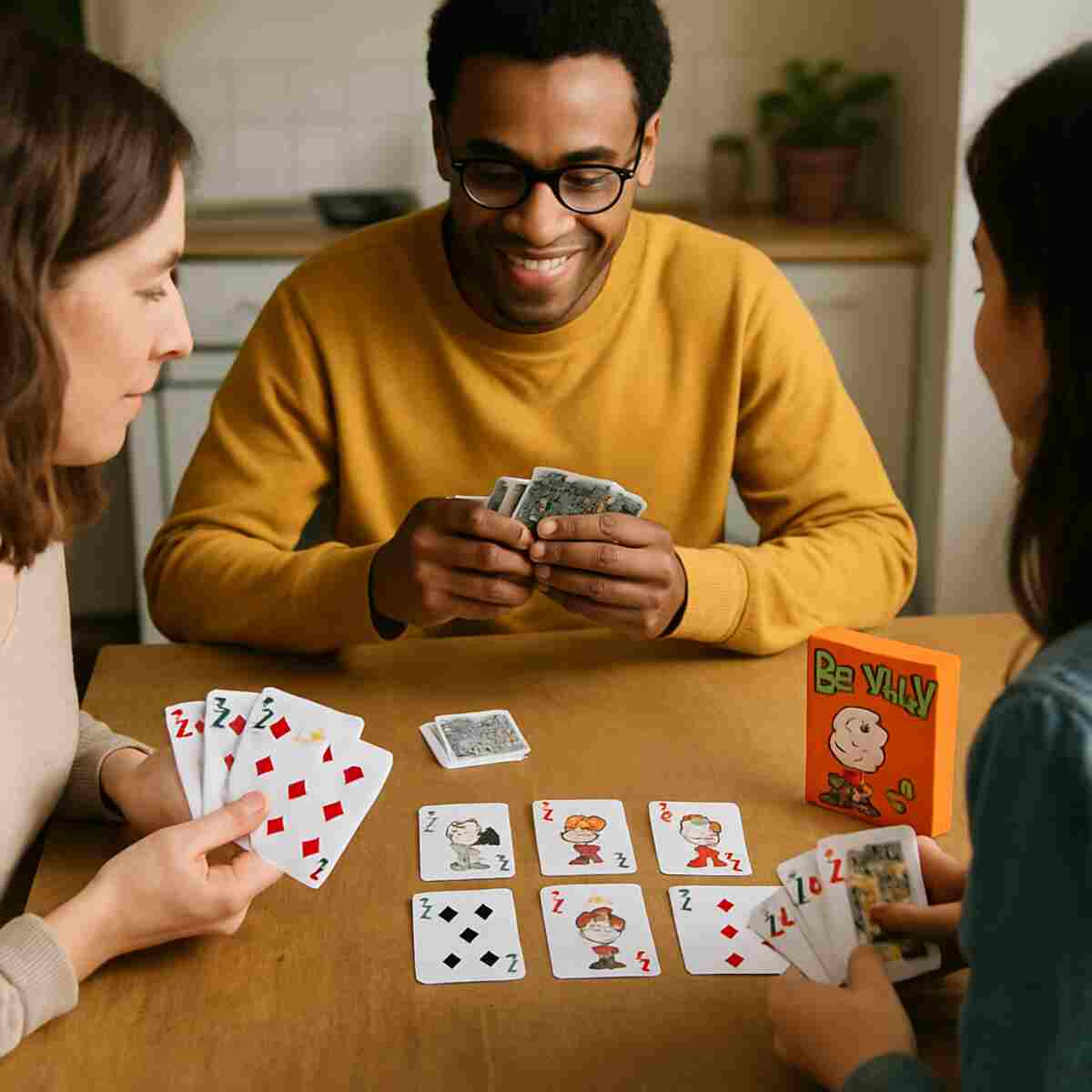
Before we dive in, let’s get a quick overview. The Peanuts card game, also known as Nertz, is a fast-paced multiplayer solitaire game that’s perfect for those who love a bit of chaos and competition. It’s all about speed, strategy, and a bit of luck. To find more, check on akongcuan
Peanuts, or Nertz, has an interesting history. While its exact origins are not well-documented, it is believed to have emerged in the mid-20th century. This game evolved from various forms of solitaire, combining the solitary enjoyment of the classic game with the competitive thrill of multiplayer interaction. The name “Nertz” is thought to have been derived from a colloquialism meaning crazy or chaotic, fitting the game’s fast-paced nature.
The appeal of Peanuts lies in its dynamic gameplay and social interaction. Unlike many card games that depend heavily on luck, Peanuts rewards strategic thinking and quick reflexes. Its popularity has spread across different age groups and cultures, making it a staple at family gatherings, parties, and social events. The game’s ability to accommodate multiple players without extended waiting times adds to its charm.
When compared to other card games, Peanuts stands out for its unique blend of solitaire-like mechanics with a competitive twist. Unlike traditional solitaire, where players are isolated, Peanuts requires players to be aware of both their own cards and those in the communal center. This simultaneous play aspect distinguishes it from turn-based games like Poker or Rummy, offering a refreshing change of pace for card enthusiasts.
Setting Up the Game
To fully enjoy Peanuts, setting up correctly is crucial. A well-prepared setup ensures smooth gameplay and maximizes the fun.
What You’ll Need
To get started, each player needs their own deck of 52 playing cards with distinct backs. This helps keep each player’s cards separate during the game. You’ll also need a flat surface big enough for everyone to have some space for their cards.
Deck of Cards
Each player’s deck should have a unique back design to avoid confusion. While any standard deck works, consider using decks with vibrant designs for a more visually appealing game. Having a variety of decks also adds an element of personal expression, allowing players to choose decks that resonate with their style.
Playing Surface
The playing surface is vital for a comfortable game. Ideally, choose a large table or a spacious floor area where players can spread out their cards without feeling cramped. A smooth surface prevents cards from sticking, ensuring a seamless experience. If playing outdoors, ensure the area is free from wind or debris that might disrupt the game.
Additional Equipment
While the primary requirement is a deck per player, having a timer or stopwatch can add an exciting twist to the game. Introducing timed rounds can increase the challenge, encouraging players to act quickly under pressure. Additionally, having a scoreboard to track points can enhance the competitive aspect, especially in group settings.
Initial Setup
Here’s how you set up your cards:
- Deal your Peanuts pile: Place 13 cards in a stack face down to your left. The top card of this stack should be flipped face up.
- Create a work area: Like solitaire, lay out four cards face up in a row next to your Peanuts pile. This is your work area.
- Form a stockpile: The remaining cards go face down to form your stockpile. You’ll draw from this during the game.
Peanuts Pile
The Peanuts pile is your primary focus at the start. Ensuring the top card is face-up provides an immediate action point. Be strategic in revealing cards from this pile, as it determines your initial moves. As you get familiar, you’ll learn to anticipate potential plays based on the visible card.
Work Area Setup
The work area serves as your personal battlefield. Arranging your four cards neatly helps in quick decision-making. As the game progresses, maintaining order in this area is crucial for spotting moves swiftly. Think of this as your strategic base, from where you’ll launch your card attacks.
Stockpile Management
Your stockpile is your reserve arsenal. Drawing three cards at a time, similar to Klondike solitaire, keeps the game challenging. Efficient management of this pile can be the difference between winning and losing. Mastering the art of cycling through your stockpile without missing opportunities is key to success.
Everyone sets up in this way, and you’re ready to roll!
How to Play Peanuts Card Game
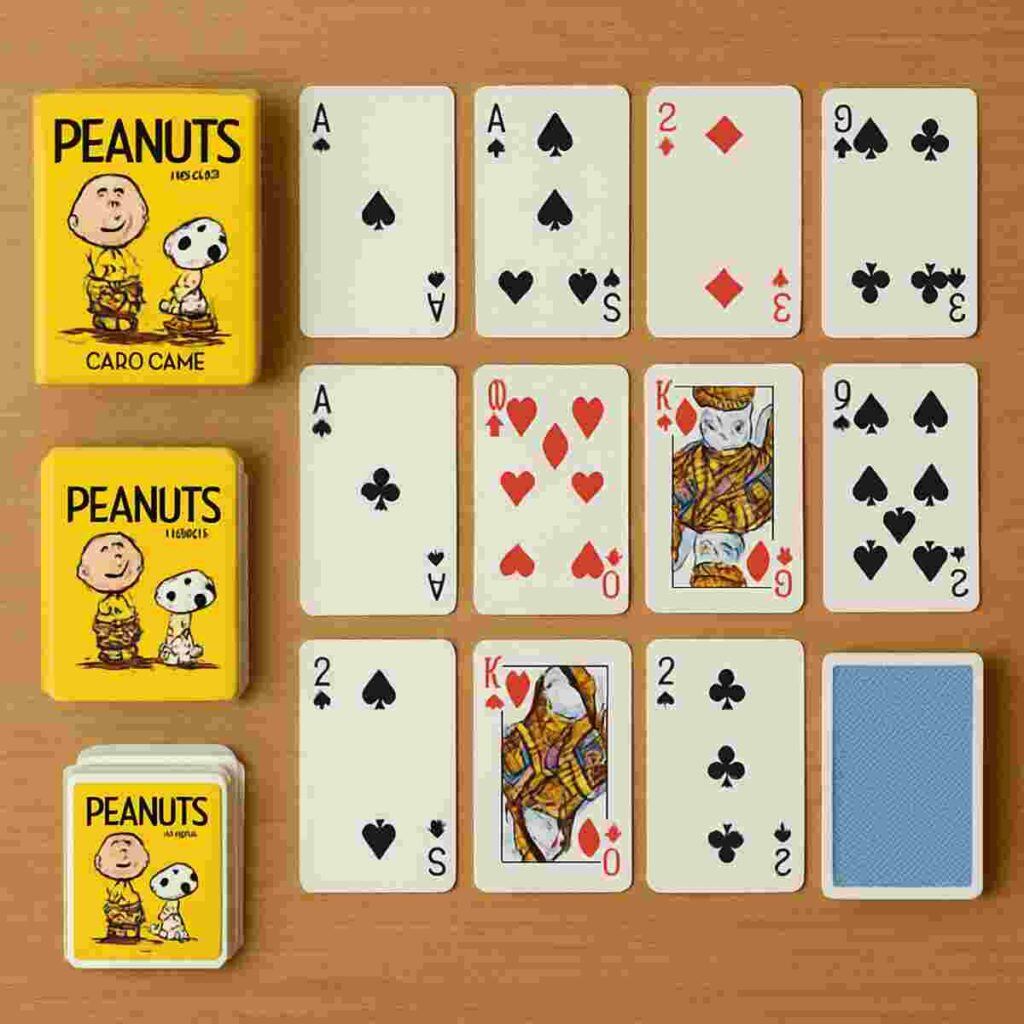
Now, let’s talk about the actual gameplay. The objective is to play all the cards from your Peanuts pile by moving them into the center or onto your work area, following solitaire-like rules.
Game Mechanics
- Playing to the Center: The center area is shared by all players. Cards are played here starting with aces. For instance, if a player places an Ace of Hearts in the center, anyone can add a 2 of Hearts on top of it, followed by a 3, and so on.
- Using Your Work Area: You can move cards around in your work area, just like in solitaire, stacking them in descending order and alternating colors. For example, you can place a black 6 on a red 7.
- Drawing from the Stockpile: When you can’t make any more moves, draw three cards at a time from your stockpile. You can play the top card onto your work area or the center pile if it fits.
- Empty Spaces: If you clear a space in your work area, you can move any card or a descending sequence of cards into that space.
Playing to the Center
The shared center pile is where the heart of the action takes place. This communal area is a battleground where players race to build sequences, starting with aces. The challenge is keeping track of multiple piles simultaneously, as a quick eye and faster hands can seize opportunities before opponents. Developing a mental map of the center piles enables strategic plays and can give you an edge over competitors.
Utilizing Your Work Area
Your work area is your personal strategic zone. Here, you can arrange and rearrange cards to create potential moves. By stacking cards in descending order and alternating colors, you set up sequences that can be quickly transferred to the center. Maintaining a tidy work area allows for rapid assessment and decision-making, minimizing downtime between moves.
Mastering the Stockpile
Drawing from the stockpile is your way of introducing new cards into play. However, patience and timing are essential. Rushing through the stockpile might cause you to overlook valuable moves. Learn to pace yourself, ensuring each drawn card has a purpose. Mastery of the stockpile involves balancing the need for new cards with the risk of missing strategic opportunities.
Managing Empty Spaces
Empty spaces in your work area are highly strategic. They provide the flexibility to maneuver cards and create new sequences. Clearing a space can be a game-changer, allowing you to reposition cards efficiently. The ability to recognize when to create and utilize these spaces is a skill developed through practice and observation.
Scoring and Winning
The first player to move all cards from their Peanuts pile shouts “Peanuts!” This ends the round, and it’s time to tally up points.
- Scoring Points: Each card you play to the center earns you one point. However, any cards left in your Peanuts pile count against you, with each card deducting two points from your score.
- Winning: The game usually continues over several rounds, with scores accumulating each round. The player who reaches a predetermined score first, say 100 points, wins the game.
Scoring System
The scoring system in Peanuts adds an exciting layer of strategy. While each card played to the center earns points, cards left in your Peanuts pile deduct points. This creates a dynamic where speed must be balanced with precision. Players must constantly weigh the benefits of playing a card against the potential penalties for cards left behind.
Declaring “Peanuts!”
Shouting “Peanuts!” is both a declaration of victory and a signal to end the round. The excitement of being the first to clear your Peanuts pile is exhilarating, but timing is crucial. Premature declarations can lead to errors, so ensure your move is legitimate. Mastering the art of the perfect “Peanuts!” call is a skill that comes with experience.
Accumulating Wins
Peanuts is typically played over several rounds, allowing for cumulative scoring. This multi-round format ensures that a single round doesn’t determine the overall winner, promoting consistency and sustained performance. Tracking scores over multiple rounds adds an element of long-term strategy, encouraging players to adapt and refine their tactics.
Tips and Strategies for Peanuts
Want to up your game? Here are a few tips:
- Speed is Key: The faster you play, the better. Keep your eyes on both your cards and the center piles.
- Watch Other Players: Pay attention to what your opponents are doing. They might open up moves for you.
- Stay Organized: Keep your work area tidy so you can quickly see available moves.
- Practice Makes Perfect: Like any game, practice helps. The more you play, the quicker and more strategic you’ll become.
Emphasizing Speed
Speed is the essence of Peanuts. The game rewards those who can think and act swiftly, capitalizing on fleeting opportunities. Developing quick reflexes and a sharp eye are crucial. To enhance speed, practice handling cards efficiently and familiarize yourself with common sequences to reduce decision-making time.
Observing Opponents
Keeping an eye on opponents is a vital strategy. By observing their moves, you can anticipate potential plays and plan your actions accordingly. Competitors may inadvertently create opportunities for you by focusing too intently on their own game. Developing a keen sense of timing and awareness can turn the tide in your favor.
Maintaining Organization
An organized work area is the foundation of successful gameplay. Neatness allows you to quickly assess your options and execute moves efficiently. Regularly tidying your area helps prevent confusion and keeps you in control, enabling faster decision-making and more effective play.
The Value of Practice
Repetition is the key to mastering Peanuts. Regular practice helps refine your skills, improving both speed and strategy. As you become more experienced, you’ll recognize patterns and develop a repertoire of effective tactics. The more you play, the more intuitive the game becomes, leading to better performance in competitive settings.
Why Play Peanuts?
Peanuts offers a unique blend of excitement and challenge, making it a favorite among card game enthusiasts.
Social Fun
Peanuts is a fantastic game for social gatherings. It’s lively, engaging, and perfect for breaking the ice or bringing some excitement to a party.
Building Connections
Playing Peanuts fosters social interaction and camaraderie. The game’s dynamic nature encourages conversation and laughter, creating a relaxed atmosphere. It’s an excellent way to connect with friends, family, and even new acquaintances, breaking down barriers through shared experiences.
Competitive Spirit
The competitive aspect of Peanuts adds a thrilling edge to social gatherings. Friendly rivalries emerge as players vie for victory, leading to memorable moments and stories. The balance between competition and enjoyment ensures everyone remains engaged, regardless of skill level.
Ideal for All Ages
Peanuts is accessible to players of all ages, making it a versatile choice for family events. Its simple rules are easy for children to grasp, while the strategic depth keeps adults entertained. This inclusivity makes it a go-to game for multi-generational gatherings.
Mental Exercise
This card game isn’t just fun—it’s a mental workout. It sharpens your focus, improves your reaction time, and hones your strategic thinking skills.
Enhancing Focus
Peanuts requires players to concentrate on multiple elements simultaneously, boosting mental acuity. The need to track cards in both personal and communal areas develops attention to detail, enhancing overall focus. Regular play can lead to improved concentration in other areas of life as well.
Improving Reaction Time
Fast-paced gameplay challenges players to react quickly to changing scenarios. This enhances hand-eye coordination and decision-making speed. Over time, players develop quicker reflexes, benefiting not only in Peanuts but in other activities that demand rapid responses.
Strategic Thinking
Strategizing in Peanuts involves anticipating moves, managing resources, and adapting to opponents’ actions. These skills translate to improved problem-solving abilities and strategic thinking. Engaging in such mental exercises regularly can enhance cognitive functions and boost overall brain health.
Portable Entertainment
All you need is a deck of cards per player, making it easy to take Peanuts anywhere—camping trips, family reunions, or just a casual hangout.
Convenience and Portability
The simplicity of Peanuts makes it a perfect travel companion. With just a few decks of cards, you can set up a game virtually anywhere. This portability ensures that entertainment is always within reach, whether you’re at home or on the go.
Versatility in Settings
Peanuts adapts well to various environments, from quiet indoor settings to lively outdoor gatherings. Its flexibility allows for play in diverse locations, ensuring that the fun continues regardless of the setting. This versatility makes it an ideal choice for spontaneous game sessions.
Cost-Effective Fun
As a card game, Peanuts is an affordable form of entertainment. With minimal equipment required, it offers endless hours of enjoyment without breaking the bank. This cost-effectiveness, combined with its engaging nature, ensures it remains a popular choice for players of all ages.
Getting Started
Ready to play? Gather your friends, shuffle those cards, and dive into the fast-paced world of Peanuts. Remember, the key is to have fun and embrace the chaos. Before you know it, you’ll be shouting “Peanuts!” and enjoying every frantic, card-flipping moment.
Gathering Players
Invite friends or family who enjoy fast-paced games. A group of four to eight players is ideal, ensuring lively competition and interaction. Encourage both seasoned players and newcomers to join, as the mix of experience levels can lead to exciting dynamics and learning opportunities.
Preparing the Environment
Set up in a comfortable space with ample room for all players. Ensure everyone has a clear view of the center area and enough personal space for their work area. A well-lit, distraction-free environment enhances focus and enjoyment, allowing players to fully immerse themselves in the game.
Embracing the Experience
Approach each game with a sense of excitement and openness. Embrace the chaos and unpredictability, as they are part of what makes Peanuts thrilling. Whether you win or lose, the camaraderie and shared experiences are what truly make the game memorable.
Now, grab those decks, and let the games begin!
