
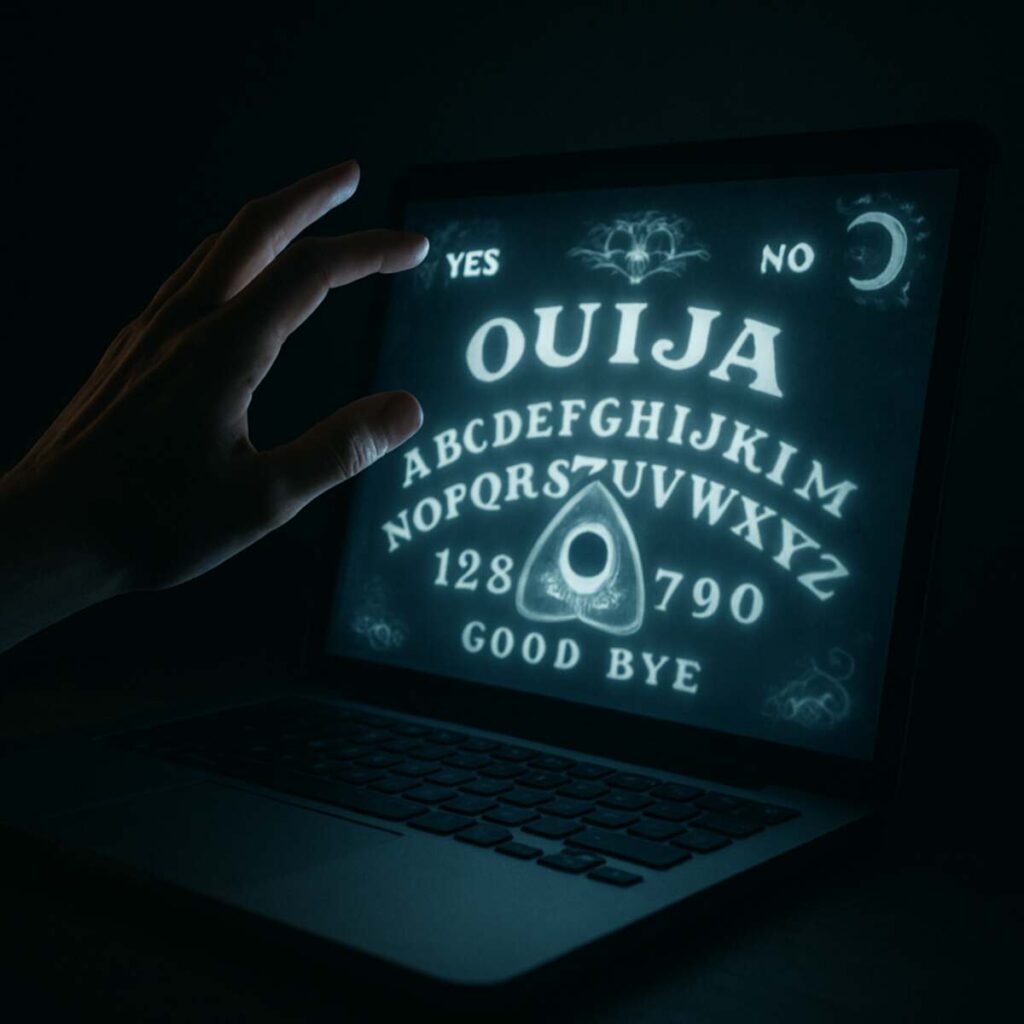
Remember the mysterious board from sleepovers and scary movies, with its pointer that seemed to move on its own? The Ouija board has fascinated people for over a century, but now it has a strange new home: online. This raises a question that sounds like a riddle: How can a spirit board work when no one is even touching it? Obtain the Best information about ufa350.
The original board wasn’t summoned from an ancient ritual; it was patented in 1890 and later sold as a parlor game by Parker Brothers. This history as a toy provides a crucial clue for its modern-day counterpart. Today’s online spirit board games often follow a similar path, starting as a form of digital entertainment but frequently feeling like something much more.
Whether an online Ouija board is ‘real’ depends entirely on how it works. A virtual spirit board is typically one of two things: a clever computer program designed to give spooky answers, or a multiplayer game where the pointer follows the averaged movements of many hidden users. The true mystery isn’t supernatural—it’s understanding the technology and the psychology that makes it feel so convincing.
This guide pulls back the digital curtain, breaking down the technology behind these fascinating programs and exploring the scientific explanation for why even a simulated board can feel eerily authentic. You’ll learn the secrets behind the new digital Ouija.
From Parlor Game to Pop Culture: The Surprising History of the Talking Board
Before it was a horror movie staple, the Ouija board had a much more ordinary beginning. While many assume it’s an ancient artifact with dark origins, the truth is far more commercial. The “talking board” was first patented in the United States in 1890, not by mystics or occultists, but by a group of businessmen who saw a market opportunity. It was designed from the start as a harmless parlor game—a novel form of entertainment for the whole family.
This identity as a mainstream toy was cemented when the rights were eventually sold to Parker Brothers in 1966. For decades, the very same company famous for Monopoly marketed the Ouija board right alongside its other family-friendly offerings. Advertisements from the era pitched it as a mysterious game that could answer questions on everything from romance to the future, tapping into innocent curiosity rather than genuine fear. It was simply a fun, slightly spooky activity for a Saturday night.
Of course, this spirit board game didn’t appear out of nowhere. It was a clever commercial answer to the 19th-century Spiritualism movement, a period when many people became fascinated with the idea of communicating with the dead. Séances were common, and people sought easier ways to make contact. The talking board brilliantly filled that cultural need, turning a complex spiritual interest into a simple, sellable product anyone could use at home.
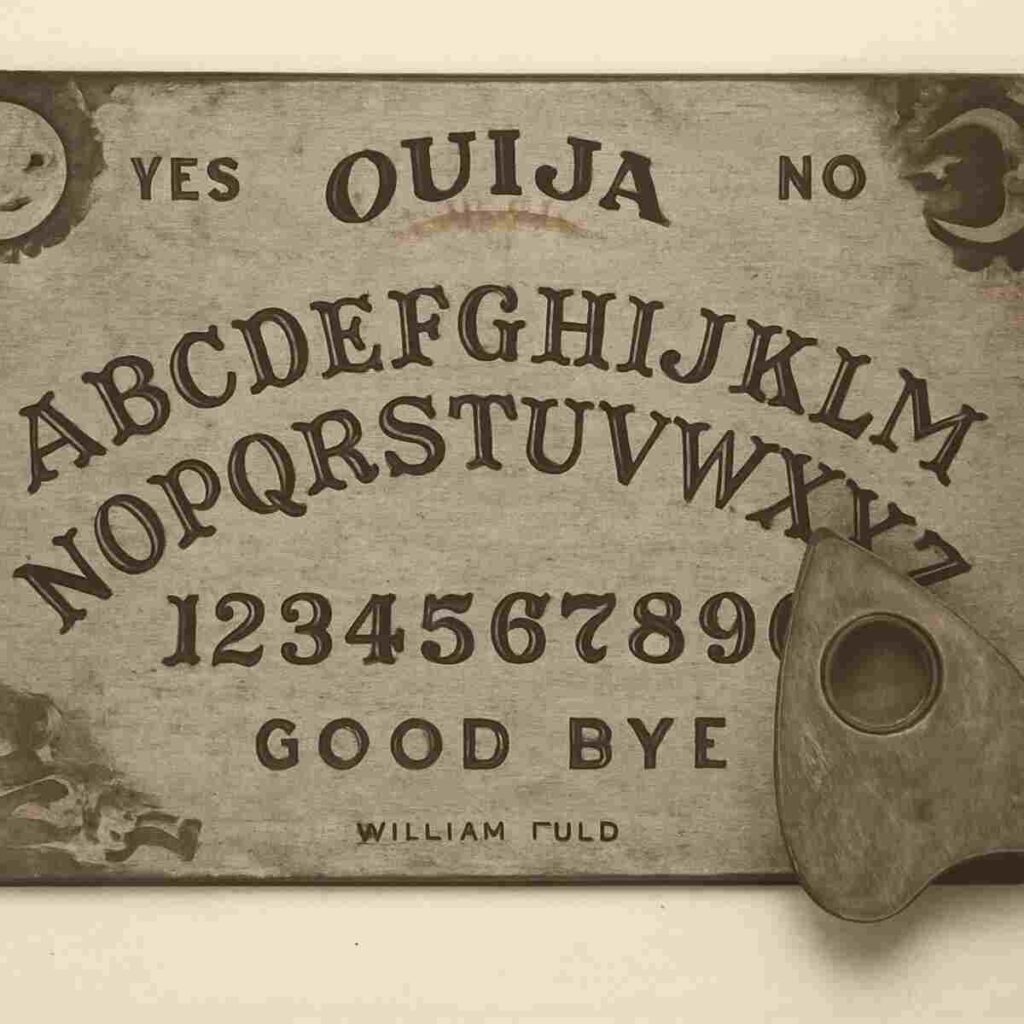
The “Invisible Force”: How a Physical Ouija Board Actually Works
If it was just a mass-produced game, what makes the planchette move? The eerie sensation of the pointer gliding across the board, seemingly guided by an invisible force, is what gives the Ouija its power. It feels real because your hands are on it, yet you swear you aren’t pushing it. The explanation for this phenomenon isn’t supernatural—it’s a fascinating quirk of the human mind.
Scientists have a name for this “invisible force”: the ideomotor effect. This is a psychological term for your muscles making tiny, unconscious movements that you’re not even aware of. When you’re focused on a question and anticipating an answer, your brain subconsciously prepares for it. Even if you think you’re holding perfectly still, your brain sends imperceptible signals to your fingertips, causing them to twitch and shift ever so slightly toward the letters you expect to see.
This effect becomes much stronger in a group. One person’s subconscious movements are small, but when several people are all touching the planchette, their combined, involuntary nudges add up to create clear, fluid motion. No single person is aware of the tiny push or pull they are contributing, so to everyone involved, it genuinely feels like the planchette is moving on its own. It’s a powerful illusion created by collective, subconscious suggestion.
This principle can be tested easily. Tie a key to a piece of string and hold it perfectly still, letting it dangle. Now, simply imagine the key swinging back and forth. Within moments, it will begin to move, guided by your own micromovements. Since the ideomotor effect requires physical touch, a digital Ouija must work differently, as there’s no board or planchette to touch at all.
So How Does an Online Ouija Board Work Without Anyone Touching It?
Because there’s nothing to physically touch, the ideomotor effect is completely out of the picture. An online board is a different beast entirely, swapping human psychology for computer code. These digital tools create the illusion of communication using one of two very different methods.
Every virtual spirit board you find online falls into one of two camps:
- Computer-Controlled Bots: The board is essentially a chatbot programmed to be spooky.
- Multiplayer Platforms: The pointer is moved by the collective input of other live users.
In the first scenario, you’re interacting with a program designed to give you an entertaining, unpredictable experience. In the second, you’re part of a digital crowd, where the planchette’s movement is an average of where everyone is moving their mouse. The most common type is the bot that runs on code.
Mechanism 1: The “Digital Magic 8-Ball” That Runs on Code
The most common type of free online planchette simulator you’ll encounter is a one-player game against the computer. Think of it less as a conversation with the great beyond and more like a sophisticated Magic 8-Ball. Behind the spooky graphics, a simple computer program is running, designed specifically to generate answers. You’re not connecting with anything supernatural; you’re interacting with code that has been programmed to act mysterious.
This process can be surprisingly simple. The most basic programs cause the planchette to select letters almost randomly, creating the illusion of a message. More advanced versions of a virtual spirit board use keyword-based AI. The program scans your typed question for specific words—like “who,” “when,” “love,” or “death”—and then pulls from a pre-written list of spooky or vague answers related to that topic. It’s the same principle that helps a customer service chatbot understand you need help with “billing” or “shipping.”
These clever programs are not supernatural tools but pieces of entertainment software. The easiest way to spot one is to look for a disclaimer on the site, often saying “for entertainment purposes only.” While these bot-driven boards are just for fun, they are only one half of the story. The other type of online board gets its answers from a source that can be far more unpredictable: other live players.
Mechanism 2: The “Crowd-Sourced Spells” Powered by Other Players
While some boards are just clever code, others tap into a far more chaotic force: other people. This second type of online spirit board is a multiplayer game where you and a group of anonymous users all try to control the same planchette simultaneously. You aren’t playing against a computer; you’re in a digital room with strangers, and the board becomes a canvas for your collective, and often conflicting, intentions.
The technology behind this is fascinatingly simple. On a multiplayer spirit board, the website constantly tracks the mouse cursor of every active user. The planchette doesn’t follow any single person’s mouse. Instead, the program calculates the average position of all cursors on the screen and moves the planchette to that middle point. If five people are trying to pull it toward “YES” and five others are pulling it toward “NO,” the planchette will likely hover indecisively in between.
This averaging effect is precisely why the experience can feel so uncanny. You are moving your mouse, but the planchette seems to have a mind of its own, drifting with a weight that doesn’t match your exact movements. Your input is being diluted by everyone else’s. This creates a powerful illusion that an external force is guiding the pointer, when it’s really just the mathematical result of group activity.
Ultimately, when you use this kind of virtual Ouija board with friends or strangers, the “spirits” you’re communicating with are the other people logged in with you. The messages that emerge are not from the beyond, but from the combined subconscious—and conscious—whims of a handful of people on the internet.
Why Do Fake Online Ouija Boards Still Feel So Creepy?
The reason these digital experiences feel so real has far more to do with our brains than with any ghosts in the machine. Our minds are hardwired to find meaning and patterns in chaos, a psychological tendency called apophenia, or patternicity. It’s the same reason we see animals in the clouds or faces in wood grain. When one of these paranormal communication apps spits out a random sequence of letters like “H-O-M-E-R-U-N,” our brain instantly filters out the jumbles of nonsense that came before it and latches onto the one part that feels like an intentional message.
Beyond our built-in pattern detector, the entire setup of an online board is designed to put you on edge. This is a psychological trick called priming. The creepy background music, flickering candle graphics, and stormy sound effects all signal your brain to get ready for something scary. It’s just like watching a horror movie alone at night; afterward, every floorboard creak sounds like a deliberate footstep. The app creates the perfect spooky atmosphere, so your mind is already expecting a ghost to show up.
Finally, there’s the incredible power of suggestion. When you ask a question like, “Is anyone with me?” you are actively hoping for (or dreading) a specific kind of answer. This expectation makes you far more likely to interpret ambiguous results as confirmation. Whether it is ‘bad’ to play Ouija online often depends on the person. If you’re easily frightened or highly suggestible, you can genuinely scare yourself by unconsciously twisting random data into a threatening narrative.
When you have one of those chillingly specific scary online spirit board experiences, it’s a powerful cocktail: your pattern-seeking brain (apophenia), working in a pre-spooked environment (priming), and influenced by your own expectations (suggestion). Even though the logical explanation is clear, the feeling of fear is very real.
How to “Play Ouija” Safely in the Digital World
Understanding the psychological tricks at play is the best way to keep your imagination from running wild. When you move from a physical board to an online one, the most significant risks have nothing to do with spirits and everything to do with internet safety. The creepy atmosphere is intentional, but the potential for data misuse or interacting with malicious people is a real-world danger.
The biggest threats you’ll face on these platforms are the same ones found across the less-reputable corners of the web: data privacy issues and encounters with anonymous strangers. Many multiplayer boards connect you directly with other users, meaning the “spirit” spelling out a message might just be another person trying to trick or harass you. Likewise, a standalone app or website could be more interested in collecting your personal data than in providing a spooky experience.
To keep things fun and secure, follow a few basic rules:
- Never Share Personal Information: Treat the board like a public chat room. Never type in your full name, address, school, workplace, or passwords. If the “spirit” asks for personal details, it’s a huge red flag.
- Check for Disclaimers: Reputable entertainment sites will almost always state that their tool is “for entertainment purposes only.” If a site is trying to convince you it’s 100% real and has no privacy policy, be wary.
- Listen to Your Gut: The whole point is to feel a little spooked, but if you start to feel genuinely anxious, harassed, or uncomfortable, just close the window. You are always in control.
By treating it as a form of interactive entertainment and practicing good digital hygiene, you can explore your curiosity without putting yourself at risk.
Online Ouija vs. Physical Board: Which Is “Better”?
When comparing an online Ouija board versus a physical one, the most significant difference is the source of the magic. A classic board is powered by you and your friends. The planchette’s eerie gliding is a direct result of the ideomotor effect—your own group’s subconscious thoughts made real. In contrast, an online board is entirely external. Its answers come from either a clever computer program or the averaged-out mouse movements of anonymous strangers.
This fundamental distinction completely changes the atmosphere. Huddled with friends in a dim room creates an intimate and vulnerable social ritual. The suspense is personal. Online sessions, while creepy, often feel more like a video game or a quirky chat room. The personal connection is replaced by the anonymity of the internet, where the “spirit” you’re talking to might just be a bored teenager in another country trying to be funny.
So, is one version truly better? It depends on what you want. For a classic, hands-on scare night that relies on group psychology, nothing beats the original physical board. But if you’re home alone and want a quick, accessible dose of interactive entertainment, a virtual spirit board is just a click away.
Beyond the Board: What Are the Alternatives to Online Spirit Communication?
If the core appeal of a spirit board is the thrill of a spooky story unfolding, you don’t have to jump straight into a simulated séance. For a lighter touch, app stores are full of “ghost hunting” tools like novelty EMF readers or spirit box simulators. These paranormal communication apps are designed purely for entertainment, creating a mysterious atmosphere without the pressure of receiving direct, sometimes unsettling, answers.
A more creative approach is to reframe the entire experience. Instead of an online Ouija, try using an AI story generator. You can give it a spooky prompt—like “a message appears on a dusty mirror”—and watch as the program spins an unpredictable tale. You get the same feeling of a mysterious narrative being revealed, but you know the “spirit” is just a clever algorithm. This satisfies the craving for the unknown without the baggage of potentially scary online experiences.
These alternatives shift the power back to you. Instead of passively waiting for a message, you become an active participant in crafting a fictional one. The goal changes from seeking proof of the paranormal to simply enjoying the process of interactive storytelling, which is often where the most powerful magic lies anyway.
Your Guide to the Digital Talking Board: From Mystery to Mechanism
The Ouija board may have once seemed like a mysterious object, a source of fun fueled by the unknown. Now you can see past that curtain, equipped with the knowledge that the physical board’s movement is a product of our own psychology, while its digital cousins are clever feats of technology.
This understanding allows you to approach any online spirit board not with apprehension, but with curiosity. You can now identify what you’re seeing: is it a chatbot programmed to be creepy, or a multiplayer game reflecting a crowd’s input? Recognizing the mechanism transforms you from a passive user into an informed observer.
The question is no longer simply about how a virtual talking board works, but what its existence reveals about our fascination with the unknown. When you encounter one, you won’t see a supernatural portal. You’ll see a reflection of the human mind—its subconscious powers and its ability to create technology that plays on our deepest curiosities. The real magic was never in the board; it was in us all along.