
A Beginner’s Guide to City Building Games Online
In a world that’s always moving fast, imagine having a quiet, creative corner all to yourself. A place where you can build something beautiful, watch it grow, and solve gentle puzzles at your own pace. For millions of people, this relaxing escape is found in city building games—a hobby that’s like having a digital zen garden or a Lego set with absolutely no limits. Get the Best information about casino online zonder cruks.
At their heart, these games give you an empty piece of land and a simple goal: build a city. You lay down the first roads, place the first houses, and watch as tiny citizens move in. You’re the mayor and chief urban planner rolled into one, making all the decisions about where to build parks, schools, and shops, but without any of the real-world pressure.
If that sounds a little intimidating, you’re not alone. Many people wonder if these so-called “urban planning games” are too complex for a beginner. The good news is that they don’t have to be. This friendly beginner’s guide demystifies the genre, explaining the core appeal and basic concepts without confusing jargon. It will help you choose the perfect first game to start your journey, so you feel confident and ready to build the city of your dreams.
So, What Exactly IS a City Building Game?
Have you ever been stuck in traffic and thought, “I could design this better”? That’s the core idea behind a city builder. In these city simulation games, you’re given a patch of empty land and a simple, creative mission: build a living, breathing city from the ground up. You are the planner and mayor all in one, deciding where every road, house, and park should go. It’s like a digital Lego set where the pieces come to life.
Unlike many games, the main goal isn’t to beat a final boss. Instead, in these city management games, your job is to keep your residents happy and healthy. As you build, digital citizens move in, and they’ll have needs—like electricity, clean water, and places to work. Success isn’t measured in points, but by solving these gentle puzzles and watching your small town flourish into a bustling metropolis.
This creates a wonderfully satisfying and relaxing rhythm. You might build a few houses, which brings in new people. Soon, they’ll need jobs, so you’ll add a shopping district. Before you know it, you’re figuring out the best place for a new power plant. As you solve one need, your city grows, presenting the next fun challenge. It all starts with just a few simple tools.
Your First Three Tools: The Magic of Roads, Zones, and Power
Every great city starts with a single line: a road. Think of roads as the skeleton of your city—they connect everything and everyone. Before you can build a single house or shop, you must give it a path to the outside world. Designing road layouts is your very first creative act, and it’s a simple but crucial step in this beginner’s zoning and infrastructure guide. Don’t worry about getting it perfect; just lay down a few streets to get started.
Once you have a road, you need to decide what to build alongside it. This is where a core concept called “zoning” comes in. Instead of placing each building one by one, you simply paint the land next to a road to tell your city what can grow there. It’s like assigning a job to a piece of land. The three main zones are:
- Residential (usually green): This is where your citizens’ houses will appear.
- Commercial (usually blue): For shops, restaurants, and offices.
- Industrial (usually yellow): The home of factories and warehouses that provide jobs and goods.
With areas for homes and jobs mapped out, there’s one last crucial piece: utilities. Just like in real life, buildings need power and water to function. If you zone a beautiful neighborhood but forget to connect it to a power plant and water pump, nobody will move in. Your first power plant is a major milestone, lighting up your new neighborhoods and officially bringing your city to life.
Roads, zones, and power are the fundamental building blocks. This simple sequence is how to start a city sim: connect with roads, assign purpose with zones, and provide power with utilities. With this foundation in place, your first citizens will start arriving, bringing with them a whole new set of fun challenges and goals.
Keeping Your Citizens Happy: The Real Goal of the Game
Now that your first residents are arriving, your job shifts from simple construction to something more personal: keeping them happy. In most city simulation games, citizen happiness is the engine that drives growth. Think of it as your city’s report card. Happy people encourage more residents to move in and are willing to pay taxes, while unhappy citizens will pack their bags and leave, turning your budding town into a ghost town. The real goal isn’t just to build, but to build a place people love.
Your citizens are already pleased that you’ve provided basic utilities like power and water, but their needs will grow along with your city. Soon, they’ll want to feel safe (requiring police and fire stations) and have their trash collected. Providing these essential services is one of the most direct ways to boost happiness. It’s all quite logical—if you were living in a new town, you’d want to know someone would respond if there was a fire.
Just as important as adding services is managing the downsides of growth. Remember those yellow industrial zones? While they provide essential jobs, they also create noise and air pollution. A citizen living next to a smokestack will become unhappy, no matter how great their fire coverage is. This introduces your first real strategic choice: planning your layout to keep residential areas clean and quiet. Balancing citizen happiness with the cost of services is a core challenge, and it all comes down to managing your city’s wallet.
Your City’s Wallet: A Simple Guide to Budgets
All those amazing services—fire stations, clinics, and parks—come with a price tag. Just like a real city, your virtual creation has a Budget, and learning to manage it is your next key to success. Thankfully, it’s simpler than it sounds. Your main source of income comes from Taxes, which your happy citizens automatically pay. The more people you have living in your city, the more tax money flows into your wallet each month. This is why keeping citizens happy is so important; it literally pays the bills.
Of course, money also needs to go out. Placing a new police station has an initial construction cost, but the expenses don’t stop there. Every service building you own also has a recurring fee called Upkeep. Think of it as the monthly cost of paying salaries and keeping the lights on. This small but constant drain on your budget is what catches most new players by surprise. Building too much, too fast, is a quick way to run out of money.
This leads to the single most important rule of city management: don’t spend more than you earn. The trick is to grow your city’s population to increase your tax income before you add the next big, expensive service. By ensuring you have enough taxpayers to support a new school or hospital, you can keep your budget in the green and your city thriving. Managing this simple balance is one of the most satisfying puzzles these games have to offer.
“Free” Games vs. Paid Games: What’s the Real Price?
As you explore the world of city building games online, you’ll quickly notice that some cost money upfront while others are completely free to start. This can be confusing, but it comes down to two simple models, each designed for a different kind of player. Understanding the difference is the key to finding the right game for you and your wallet.
Many titles, especially on phones or in a web browser, are Free-to-Play, or F2P. You can download and start building your city without paying a cent. The catch? These games often include optional purchases called microtransactions. Think of it like an amusement park with free admission—you can enter and walk around, but you might need to pay to skip a long line for a ride. In games, this often means paying a small amount to speed up construction timers or get special decorative items.
On the other hand, you have Premium games, which you can think of as “Pay-Once” experiences. This is like buying a board game; you pay one price at the beginning, and everything in the box is yours to use whenever and however you want. These are often the best choice for players looking for city constructor games with no microtransactions to interrupt their creative flow. You get the entire, complete game without any timers or pressure to spend more.
Ultimately, neither model is better—they’re just different. Free-to-Play games are great for short, casual sessions on the go. But if you’re craving a deeper, more immersive experience where you can build for hours without interruption, a premium, pay-once title is likely the better fit.
Your First PC City: Why We Recommend Cities: Skylines
For those seeking that complete, pay-once experience on a computer, one game stands out above all others as the perfect starting point: Cities: Skylines. For many, it’s the game that perfected the formula classic titles like SimCity made famous, allowing you to paint a sprawling metropolis onto a digital canvas. Many players feel it is the most realistic city builder game available, giving you creative control over everything from drawing road networks to placing individual parks and schools, all without timers or interruptions.
But doesn’t a realistic game sound complicated? While it offers incredible depth for experts, the game includes a wonderful feature for newcomers: an “Unlimited Money” mode. Starting your first city this way is the best tip for any beginner’s guide to urban planning games. It removes all the financial pressure of taxes and budgets, letting you experiment freely. Think of it as being handed an infinite box of Legos; you can simply focus on learning how to build roads, zone neighborhoods, and connect utilities without the stress of going bankrupt.
The most common way to get Cities: Skylines is through a free-to-use program called Steam. Think of Steam as a massive online store and digital library for PC games. You create a free account, purchase the game once, and it’s added to your account permanently, ready to download and play whenever you like.
Build a City on the Go: Best Free-to-Start Games for Mobile & Browser
What if you prefer gaming in short bursts on your phone or in a web browser? The world of city building games online has plenty of fantastic options that don’t require a powerful computer. For a pure city-planning experience on mobile, Pocket City is a wonderful starting point. It offers a free version that feels like a simplified, handheld version of classics, letting you design your town without overwhelming complexity. It’s the perfect way to see if you enjoy the core loop of zoning, building, and problem-solving on the go.
Many of these free mobile city games and browser titles have a different rhythm. Instead of one long session, they are designed for you to check in throughout the day. You might tell your workers to build a new house, and it will take a few minutes (or hours) to complete. This creates a relaxed style of play where your city grows even when you’re not actively watching. You pop in, collect resources, assign new tasks, and come back later to see the results.
A perfect example of this is Forge of Empires, one of the most popular and best free browser based city builders available. This game does more than just ask you to build a city; it tasks you with guiding a small settlement from the Stone Age all the way to the future. Here, city management is blended with history and strategy, as you research new technologies to unlock more advanced buildings and units.
This relaxed, progression-focused pace is a hallmark of the genre on these platforms, offering a different kind of satisfaction. Watching your small village slowly evolve over days and weeks is incredibly rewarding, especially if you have a passion for the past.
Love History? Build a Roman or Medieval Metropolis
If the idea of guiding a society through the ages captured your imagination, you’ll be thrilled to know there are entire games dedicated to it. These historical city construction simulators swap modern problems like traffic and skyscrapers for ancient challenges. Instead of managing a power grid, you’ll be more concerned with securing a steady supply of grain for your citizens or establishing a new trade route by sea to acquire valuable spices. It’s a fascinating shift that makes you think like an old-world governor rather than a modern-day mayor.
In these games, everything is connected. For your villagers to have warm clothes, for example, you can’t just build a shop. You first need to set up a sheep farm to produce wool, then build a weaver’s hut to turn that wool into finished garments, and finally, ensure it all gets delivered to the marketplace. This satisfying puzzle of connecting resources to needs forms the core of games with deep economic simulation, turning your city into a living, breathing machine of production.
This focus on intricate supply lines is perfected in games like the beautiful and celebrated Anno 1800. While it might be a great second or third game to try once you’re comfortable, it shows just how rewarding this style of play can be. Whether you’re building a bustling port in the Industrial Revolution or a quiet medieval monastery, these games offer a rich, strategic experience.
Beyond Earth: Building a Sci-Fi Metropolis on Mars
If imagining our future sparked your curiosity, then you’ll love the worlds offered by sci-fi metropolis management games. Instead of laying down familiar streets and suburbs, these games challenge you to build thriving colonies on distant planets, in the deep ocean, or even on the back of a giant, wandering creature. You’re not just building a city; you’re building a foothold for humanity in a strange and often hostile new environment. This futuristic theme provides a completely different creative canvas for you to paint on.
The biggest twist in these games is that survival itself becomes your primary job. While a city on Earth needs water and power, a colony on Mars needs breathable air and protection from cosmic radiation. In a game like Surviving Mars, your first task isn’t zoning for shops, but constructing a sealed dome and a life support system to produce oxygen. You must secure these absolute essentials before your first colonists can even set foot on the red planet, raising the stakes from citizen happiness to citizen survival.
This might sound intense, but the sense of accomplishment is huge. There’s nothing quite like watching your fragile, glowing dome city thrive while a deadly dust storm rages outside. Some of these games even allow for cooperative world building with friends, letting you tackle the unknown together. Whether you’re building in the past, present, or future, all city building games start with the same first few steps. Feeling ready to lay your first road?
Your First 30 Minutes: A Fear-Free, Step-by-Step Plan
Staring at a huge, empty map can feel a little intimidating. Where do you even begin? Don’t worry; this beginner’s guide to urban planning games is all about starting small and simple. The secret is to forget about building a massive city and focus on creating just one functional neighborhood. This simple four-step plan will take you from an empty field to a living community in no time.
Your immediate goal is to create a small, self-sufficient area where people can live and have their basic needs met. All it takes is putting the core building blocks—roads, zones, and utilities—together in the right order.
- Step 1: Draw Your First Road. Select the road tool and draw a simple street. This is the backbone of your new community, giving people a place to build.
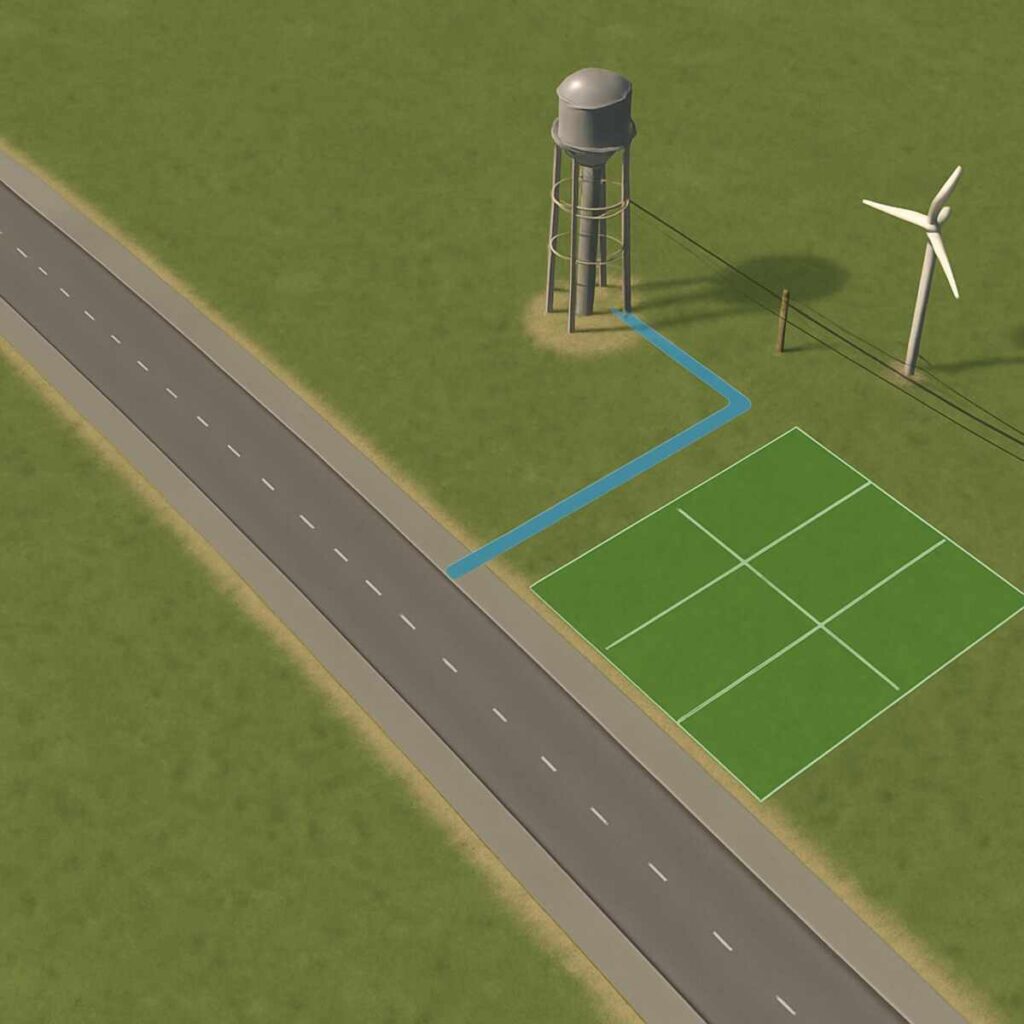
- Step 2: Zone a Residential Area. Think of this as telling people where they’re allowed to build houses. Select the “residential” zoning tool (usually colored green) and paint an area right next to your road.
- Step 3: Provide Power and Water. Your new residents need basic services. Place a wind turbine for electricity and a water tower nearby, then connect them to your zoned area with power lines and pipes.
- Step 4: Press Play and Watch! Unpause the game and watch what happens.
This is where the magic begins. You’ll see construction vehicles arrive and, soon after, little houses will pop up in the area you designated. Congratulations, you officially have citizens! This simple loop is the heart of the game. As more people move in, you’ll notice more cars on your new road, which naturally leads to every new mayor’s first big challenge: the dreaded traffic jam.
Help, My First Traffic Jam! A Simple Fix for Tangled Roads
Seeing your first road turn angry red with traffic can feel like a failure, but it’s actually the opposite—it’s a sign of success! A busy city is a growing city, and traffic is the first fun puzzle the game gives you to solve. Learning how to manage resources like road space isn’t a chore; it’s the core of what makes these games so engaging.
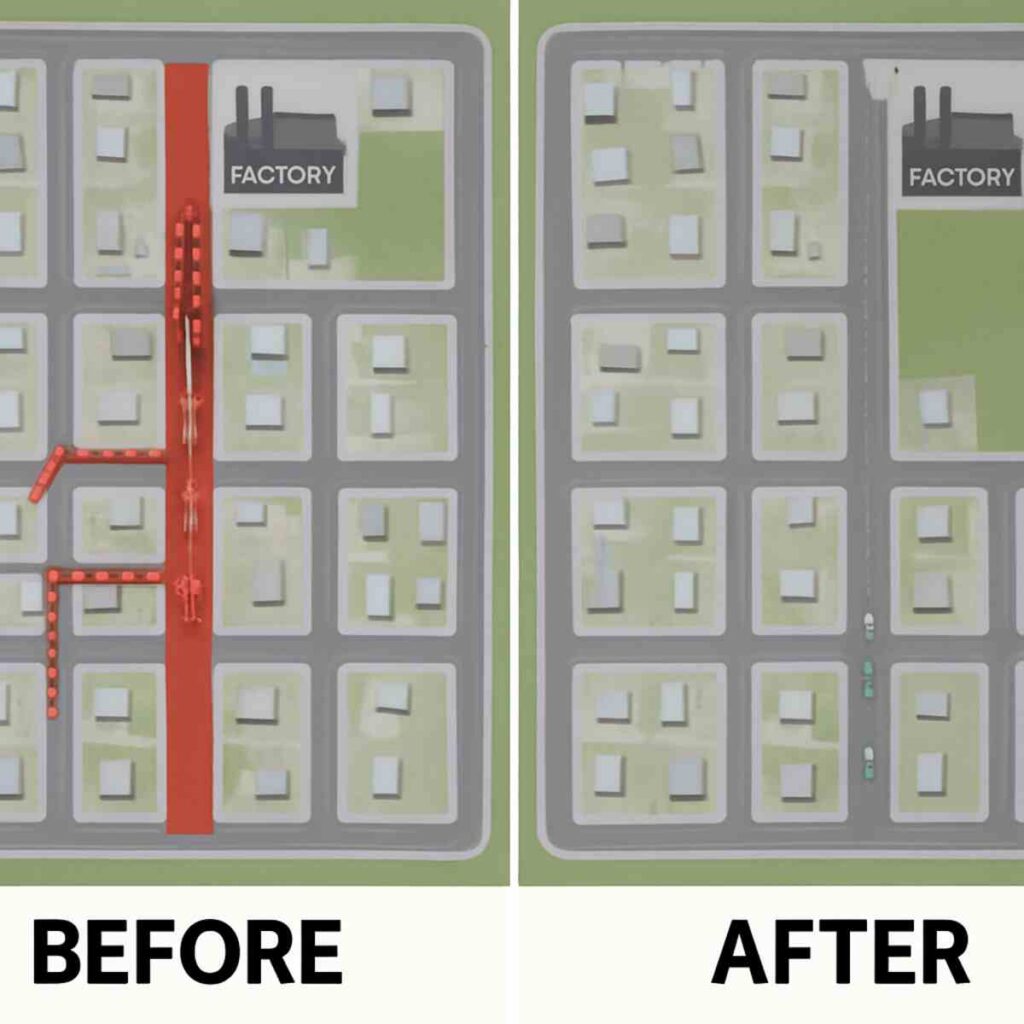
The solution lies in a simple concept that real city planners use every day: road hierarchy. Think about the roads in the real world. You have small, quiet streets in neighborhoods that all connect to a bigger, busier main road, which in turn might lead to a massive highway. Your goal is to copy that pattern. Instead of having dozens of little house-lined streets all connect directly to a single factory or commercial zone, you should funnel that traffic. Guide all the cars from the small “local” roads onto a single, larger “collector” road that can handle more volume.
This is where the game truly opens up. Don’t be afraid to use the bulldozer tool—it’s your best friend! Redesigning and improving your city is a central and enjoyable part of the experience. As shown in the example below, by removing the messy web of direct connections and creating a single, large avenue to serve your industrial area, you can clear up a jam in seconds. This simple fix provides one of the most satisfying moments in the game: watching gridlock disappear because of a plan you created.
You Are Ready to Build: Go and Lay Your First Road
Just a short while ago, the world of city builder games might have seemed overwhelming, full of complex menus and mysterious rules. Now, you understand the simple language of urban planning strategy, from zoning neighborhoods to connecting utilities. You’ve moved from curiosity to capability, armed with everything you need for getting started with city sims.
This journey isn’t a test—it’s an invitation to your own digital canvas. The goal is not about building the “perfect” city, but about the quiet joy of creation. It’s about solving gentle puzzles and watching a world of your own design take shape, one road and one building at a time. There is no right or wrong way to begin, only your way.
There’s nothing left to read. The only thing left to do is build. Pick your game, load that fresh map, and lay down your very first road. You are more than ready. Happy building.