
The sight of shattered glass where your car window used to be is a uniquely frustrating San Francisco experience. Whether it was a break-in downtown or a stray rock on the 101, your day has been instantly disrupted by a cascade of questions and stress. This guide cuts through the confusion, giving you the exact, step-by-step plan to get your vehicle secured and repaired correctly. Have the Best information about san francisco auto glass.
Your mind is likely racing with immediate concerns: What do I do right now to cover the gaping hole? How much is this going to cost? And will my insurance actually help? Many drivers feel overwhelmed, worried about getting overcharged or choosing the wrong service. We will walk you through each decision, ensuring you feel confident and in control of the situation from this moment forward.
This guide provides a clear roadmap, starting with the first-response actions you should take in the next 15 minutes. From there, we demystify the process of navigating insurance versus paying out-of-pocket, whether you need a simple cracked windshield repair in SF or an emergency car window replacement in San Francisco. You will learn the critical questions to ask any repair shop to ensure a safe, high-quality installation.
Unlike generic advice, this resource is built for the specific challenges of our city. We address the realities of mobile repairs on steep hills, finding reputable technicians quickly, and understanding what makes for durable San Francisco auto glass work. By the end, a shattered window will go from being a day-ruining crisis to a manageable problem you know exactly how to solve.
What to Do in the First 15 Minutes After Your Car Glass Breaks
Before you even think about the car side window replacement cost, take a deep breath. These next few minutes are critical for your safety and your insurance claim, and the steps are surprisingly simple.
First, focus on safety and documentation. Do not touch the broken glass with your bare hands, as the small, pebble-like pieces of a side window or the sharp edges of a windshield can be dangerous. Once the area is clear, grab your smartphone. Taking the right pictures is the single most important thing you can do to simplify how to file an insurance claim for windshield damage or a broken side window.
Follow this quick three-step checklist to make the process smooth:
- Photograph Everything: Take three key pictures. First, a wide shot of your car showing the damage and the license plate. Second, a close-up of the broken glass itself. Third, a photo of your car’s VIN (Vehicle Identification Number), which is the small metal tag on the driver’s side dashboard, visible through the windshield. This proves ownership and links the damage directly to your vehicle.
- Secure the Vehicle: To protect your car’s interior from rain or debris, create a temporary window cover. A sturdy trash bag or a piece of thick plastic sheeting, held in place with packing tape on the outside of the car frame, works well. This is just a temporary fix until you can get an emergency car window replacement in San Francisco.
- Clean Up Safely: Use a brush and dustpan, or a vacuum if available, to carefully clean up any glass inside your car.
With your car secured and documented, you’ve successfully handled the immediate crisis. Now you can focus on the solution. The next step is figuring out if you’re dealing with a simple repair or if you need a full replacement.
Chip Repair vs. Full Replacement: A Quick 30-Second Test
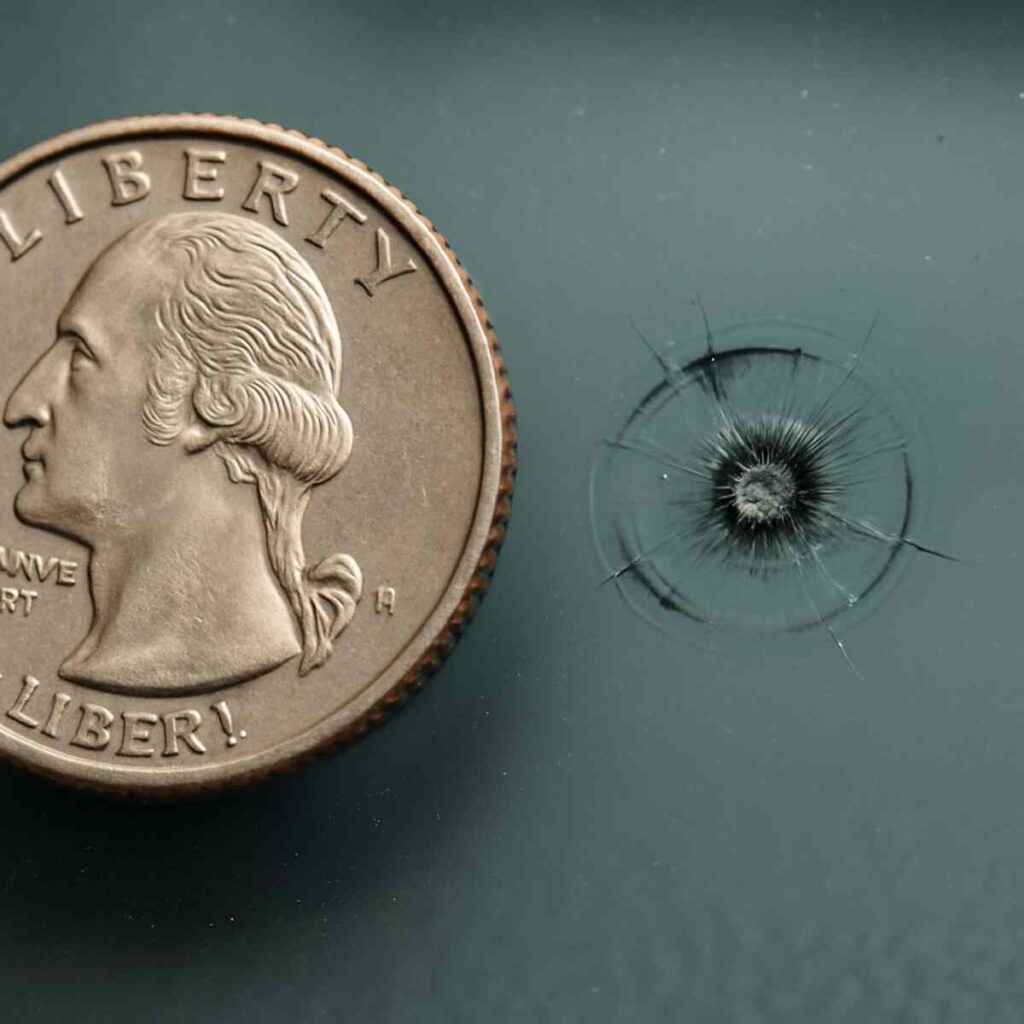
Not all glass damage is a disaster. To figure out if you need a quick repair or a full replacement, use this simple test: lay a dollar bill over the damage on your windshield. If the chip or crack is completely hidden underneath the bill, you are likely a candidate for a repair. This is especially true for small, circular “bullseye” or “star” chips that are smaller than a quarter. Anything larger, a crack that is actively spreading, or damage that sits directly in the driver’s line of sight typically requires a full replacement.
That small chip might seem harmless, but it’s a weak point in your windshield’s structure. The constant vibrations from driving on San Francisco’s uneven streets, combined with temperature swings from a foggy morning to a sunny afternoon, put stress on the glass. This pressure can easily turn a tiny, repairable chip into a large, unfixable crack overnight. Acting on a small issue quickly is the key to avoiding a much bigger expense, which is why a fast cracked windshield repair in SF is so important.
The difference in cost is significant. A windshield chip repair process is quick, often taking less than 30 minutes, and can cost under $100—many insurance policies even waive the deductible for it. A full replacement, however, can easily cost $400 or more. This repair-first approach only works for windshields, because their multi-layer construction is fundamentally different from the glass in your side windows.
Why Your Windshield and Side Windows Shatter Differently
Ever wonder why a rock on the freeway leaves a crack in your windshield, but a break-in leaves your car filled with tiny glass cubes? It’s because your car uses two different types of safety glass. Your windshield is made of laminated glass, which is like a safety sandwich: two sheets of glass with a sticky, clear plastic layer in the middle. When it gets hit, that inner layer holds the glass together, preventing it from shattering into the car and protecting you from flying debris.
Your side and rear windows, however, are made from a single sheet of tempered glass. This glass is heat-treated to be much stronger than normal glass. Its real safety feature is revealed when it breaks. Instead of creating large, dagger-like shards, it’s designed to crumble into thousands of small, relatively harmless pebble-like pieces. This design minimizes the risk of serious injury during an accident or a smash-and-grab.
This distinction between tempered vs laminated car window glass is key. It explains why a windshield can often be repaired while a shattered side window always needs a full auto glass replacement. Now you know what kind of damage you’re dealing with, you can address the next question on your mind when looking for san francisco auto glass service.
The Big Question: How Much to Replace a Car Window in the Bay Area?
The cost of repair is often the primary concern after the initial shock of seeing shattered glass. The final price tag for auto glass service depends on a few key factors: the type of glass, your vehicle’s make and model, and any special technology embedded in the window.
To give you a clear idea of what to expect, here are typical out-of-pocket price ranges for replacing a car window in the Bay Area. Keep in mind these are estimates, but they provide a solid starting point for budgeting.
- Windshield Chip Repair: $70 – $130
- Side Window Replacement (Tempered Glass): $250 – $450
- Windshield Replacement (Basic, no special features): $350 – $600
- Windshield Replacement (with Advanced Features): $700 – $1,500+
You probably noticed the significant jump in windshield replacement cost. This is almost always due to modern safety technology. If your car has features like lane-keeping assist, automatic emergency braking, or a heads-up display, its “eyes” are cameras and sensors mounted directly on the windshield. After replacing the glass, these systems must be professionally recalibrated to ensure they function correctly. It’s a critical safety step that adds to the overall cost.
Seeing these figures, your next logical question is likely whether your insurance will cover the bill and if filing a claim is the right move.
Using Insurance for Glass Damage: Will It Raise Your Rates?
When your car window breaks from something other than a car accident—like a break-in or a rock on the freeway—it’s typically handled by your comprehensive coverage. This is the specific part of your insurance designed for non-collision events. The good news is that most drivers have this coverage, so there’s a strong chance your policy can help with the bill.
The most important number you need to find is your comprehensive deductible. Think of the deductible as the portion you are responsible for paying before your insurance company covers the rest. You can find this amount listed on your policy documents or by logging into your insurance provider’s app or website. For auto glass, deductibles are often set at $250, $500, or sometimes even $0 for certain repairs.
With that number in hand, the decision becomes simple math. If the quote to replace your window is $400 and your deductible is $500, it makes more sense to pay out-of-pocket. Conversely, if a new windshield with advanced safety features costs $1,200 and your deductible is $500, filing a claim would save you $700. This straightforward comparison is the best way to decide how to file an insurance claim for windshield damage.
Of course, the big worry is whether a claim will cause your rates to spike. Insurers generally view comprehensive claims differently from at-fault accidents. Since a smash-and-grab or a stray rock isn’t your fault, a single auto glass insurance claim is highly unlikely to have a major impact on your premium. With that peace of mind, your next move is to find a professional who not only does quality work but can also make the insurance process seamless.
How to Choose a Trustworthy SF Auto Glass Shop
Knowing how to handle the insurance is half the battle; choosing the right professional to do the work is the other. In a city with so many options, a few key signals can help you separate the reliable experts from the rest. When vetting San Francisco auto glass providers, you’re not just buying a piece of glass—you’re buying the expertise and safety that comes with a proper installation.
A trustworthy shop’s confidence in its work is often backed by a lifetime warranty. This warranty doesn’t cover future rock chips, but it does cover the most critical part of the job: the seal. It’s a promise that your new window won’t leak or have wind noise due to a faulty installation. If a shop doesn’t offer this, consider it a major red flag. They should be willing to stand behind their workmanship forever.
Beyond a warranty, the most important credential to ask about is AGSC certification. The Auto Glass Safety Council (AGSC) is the industry’s gold standard for safety training. A certified technician has been tested on the proper procedures for everything from applying the adhesive to recalibrating safety systems. It’s the simplest way to ensure the person working on your car is a trained professional, not just a handyman.
To find the best provider for your needs, use this quick checklist. Whether you’re calling for auto glass repair services or looking at a company’s website, make sure you can answer “yes” to these questions:
- Are their technicians AGSC certified? This ensures they are trained for safety.
- Do they offer a lifetime warranty on the installation seal? This shows they stand by their work.
- What do recent online reviews say? Look for comments on professionalism, timeliness, and how they handled any issues.
- Do they work directly with your insurance? A good shop will handle the paperwork for you, making the process far less stressful.
Once you’ve found a few qualified shops that tick these boxes, your next decision often comes down to logistics. This brings up a common question for busy people in the Bay Area: is it better to use a mobile service or go directly to the shop?
Mobile Repair vs. In-Shop Service: Which is Better in San Francisco?
The convenience of mobile auto glass service is undeniable, especially in a city where your time is valuable. Having a technician come to your home or office for a same-day windshield replacement SF means you don’t have to cancel your day, navigate traffic, or arrange for rides. For a busy person, this service seems like the obvious choice, but it’s important to understand when it’s the right call.
For the vast majority of common jobs—like replacing a shattered side or rear window—a mobile service is just as good as going to a shop. A certified technician brings all the necessary tools and expertise to perform a perfect installation on-site. The quality of the work on these standard replacements doesn’t change whether it’s done in your driveway or in a service bay.
However, there are two key situations where heading to a physical shop is the smarter, safer decision: bad weather and complex electronics. The strong adhesive that creates a waterproof seal on your windshield needs a clean, dry environment to cure properly. San Francisco’s famous damp fog or a drizzly day can compromise that seal if the work is done outdoors. Furthermore, vehicles with advanced safety systems often require recalibration in a controlled shop environment.
Ultimately, the choice depends on your specific repair and the day’s weather. For a straightforward window replacement on a clear day, the best mobile auto glass repair Bay Area services offer unbeatable convenience. But if your modern windshield needs replacing, especially when the weather is questionable, taking it to the shop ensures the job is done under ideal conditions. This is particularly important because of a critical feature called ADAS.
That “ADAS” Thing: Why Your New Windshield Needs Recalibration
If your car has modern features like automatic emergency braking, adaptive cruise control, or an alert that beeps when you drift from your lane, then you’re relying on its Advanced Driver-Assistance Systems, or ADAS. These features aren’t just for convenience; they are active safety systems designed to prevent accidents. And the key to making them work is, surprisingly, your windshield.
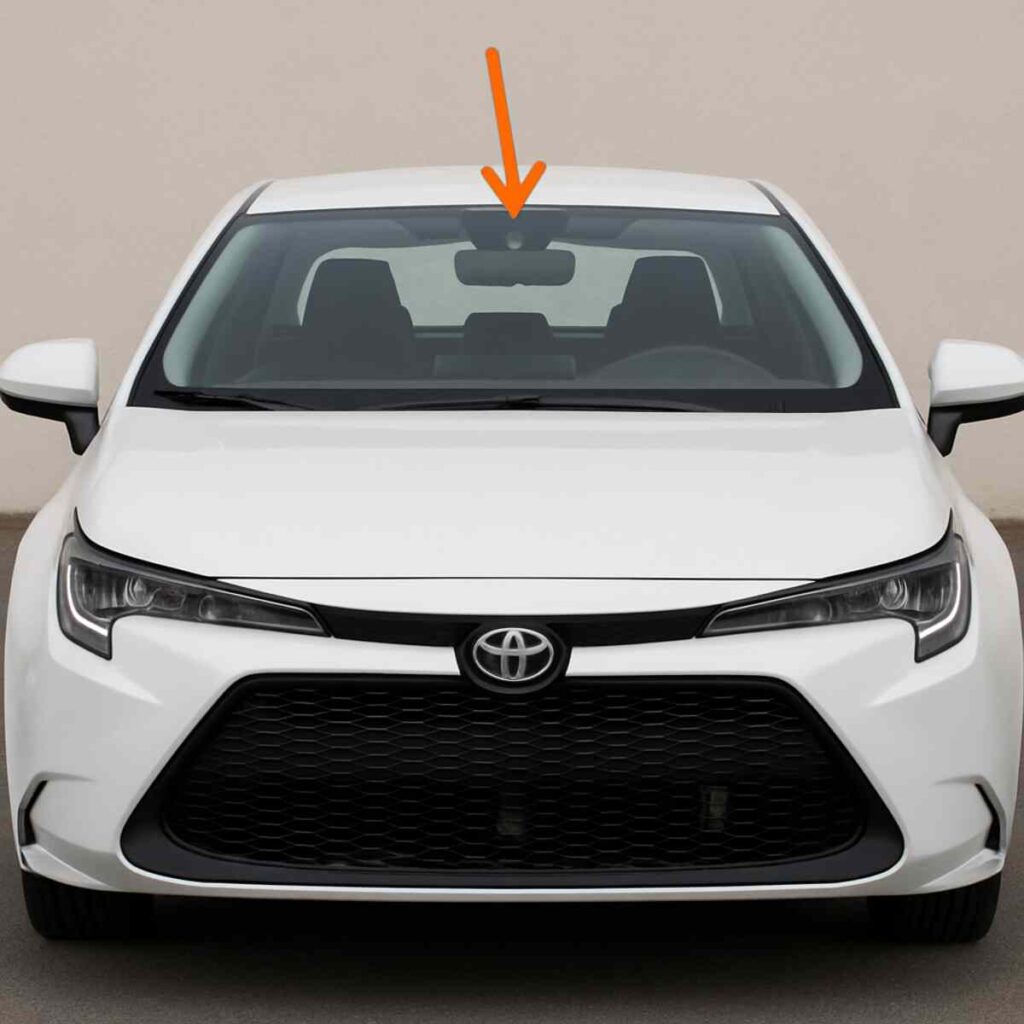
You might not see them, but the “eyes” for these high-tech systems—a bundle of sophisticated cameras and sensors—are mounted directly on the inside of your windshield, often housed in a small black box behind your rearview mirror. They constantly scan the road, measuring distances to other cars and tracking lane markings. This placement is precise and critical for them to “see” the world correctly.
When a technician performs an auto glass replacement, the new glass will never sit in the same position as the old one, down to the sub-millimeter level. Think of it like getting a new pair of prescription glasses; your eyes need a moment to adjust. Similarly, your car’s camera needs to be professionally re-aimed. This crucial safety step is what ADAS calibration is all about: resetting the system’s parameters so it sees the road accurately through the new glass.
Skipping this step is a serious gamble. An uncalibrated camera can misjudge the distance to the car ahead, potentially causing your automatic braking to engage too late or not at all. It could fail to detect lane lines, rendering your lane-keeping assist useless. Because these systems depend on such precision, the quality and exact specifications of the glass itself also become incredibly important.
OEM vs. Aftermarket Glass: Is ‘Generic’ Good Enough for Your Car?
The type of glass you choose absolutely matters, especially for cars with sensitive ADAS features. When you need an auto glass replacement, you’ll face a choice between two main types of glass: OEM and aftermarket. Understanding the difference is key to making a smart decision that balances cost and quality.
The easiest way to think about this choice is like comparing brand-name and generic medicine. OEM (Original Equipment Manufacturer) glass is made by the same company that produced your car’s original windows. It’s a perfect match in every way—fit, tint, thickness, and a guaranteed match for your car’s logo. Aftermarket glass, on the other hand, is made by a different company. It’s designed to meet the same safety standards and fit your vehicle, but it’s a copy, not the original.
This naturally leads to the big question: Is the less expensive, aftermarket option safe? For most drivers, the answer is a resounding yes. Reputable glass repair services use high-quality aftermarket glass from trusted manufacturers that meet or exceed all federal safety requirements. It’s a safe, reliable, and common choice that can save you a significant amount of money without compromising the structural integrity of your vehicle.
So, when does paying the premium for OEM glass make sense? It’s often the best choice if you’re driving a leased vehicle (as many lease agreements require it) or if your car has particularly complex or sensitive ADAS technology. Some advanced systems are calibrated specifically to the precise optical qualities of OEM glass. A professional technician can advise you on what’s best for your specific make and model, ensuring your car is both safe and properly equipped for the road ahead. Once you’ve made your choice, the actual repair is a surprisingly quick process.
The Replacement Process: What to Expect on Repair Day (60-90 Minutes)
One of the first questions on your mind is likely, “how long does windshield replacement take?” You’ll be pleasantly surprised. Whether you visit a shop or use a mobile auto glass service that comes to your home or office, the hands-on work typically takes only 60 to 90 minutes. Many people can even get a same-day windshield replacement in SF if they call early enough.
The actual replacement is a precise, multi-step process. While you wait, a certified technician will:
- Remove the Old Glass: Carefully take out the damaged windshield and the old, worn-out waterproof seal.
- Prepare the Frame: Thoroughly clean the vehicle’s frame where the glass sits, removing old adhesive to ensure a perfect, clean bond.
- Apply New Adhesive: Lay down a new bead of a powerful, specialized adhesive that creates a strong, waterproof seal.
- Set the New Glass: Precisely place the new windshield, making sure it’s perfectly aligned and settled.
After the new glass is in, the single most important part of the process begins: the waiting. The adhesive needs time to harden and cure. Think of it like letting concrete set—it needs to sit undisturbed to reach its full strength. This step is non-negotiable for your safety. A properly cured windshield is a structural part of your car; it supports the roof in a rollover and ensures your passenger-side airbag deploys correctly in an accident.
Your technician will give you a specific “Safe Drive-Away Time,” which is usually about an hour after the installation is complete. Following this instruction is crucial. Rushing it can lead to a leaky seal or, far worse, a compromised safety system. Knowing your car is properly secured gives you peace of mind, especially when you’re driving around the city.
Is It Illegal to Drive with a Cracked Windshield in California?
Beyond the obvious safety concerns, many drivers wonder if it is illegal to drive with a cracked windshield in California. Legally, yes, it can be. While a tiny chip in a corner might not get you pulled over, a significant crack—especially one in the wrong place—is grounds for a ticket and a fix-it order. The law isn’t about punishing you; it’s about ensuring every driver has a clear, unobstructed view of the road.
The specific rule comes from the California vehicle code for windshield cracks, section 26710. In simple terms, this law states that you cannot drive a vehicle with any damage that impairs the driver’s vision. For windshields, this is typically interpreted to mean any crack, spiderweb, or star-shaped break located on the driver’s side of the glass. If the damage is directly in your line of sight while you are looking ahead, it is considered illegal and unsafe.
Ultimately, the law exists to keep you safe. A crack can easily distract your eye or obscure a pedestrian or another car at a critical moment. It also compromises the structural integrity of the glass, which is a key safety component. This is why getting a prompt cracked windshield repair in SF is not just about avoiding a ticket—it’s a crucial step to ensure your own safety and the safety of everyone else on the road.
Your Final SF Auto Glass Action Plan
You started this process with shattered glass and a lot of stress. Now, you have a clear understanding of the difference between a simple fix and a full replacement, how your insurance plays a role, and why modern vehicle safety systems are so critical. You’ve gone from being the victim of a frustrating situation to an informed customer who knows exactly how to take control.
This isn’t just information—it’s your action plan. Save this checklist to your phone; it contains everything you need to confidently find the right San Francisco auto glass solution.
- Document & Secure: Take photos of the damage for your insurance claim, then cover the opening to protect your car’s interior.
- Assess the Damage: Determine if it’s a small chip (potential repair) or a spreading crack that needs a full replacement.
- Check Your Deductible: Before you get quotes, call your insurance agent to see if filing a claim makes financial sense.
- Vet Your Shop: Don’t just pick the cheapest option. Look for certified technicians (AGSC), a lifetime warranty, and positive local reviews for auto glass repair services.
- Confirm ADAS Recalibration: If your windshield is being replaced, insist that the shop performs this essential safety step. It’s non-negotiable for a proper cracked windshield repair in SF.
Navigating a car repair in a busy city can feel overwhelming, but you are no longer starting from scratch. You now have the knowledge to ask the right questions, spot a quality provider, and ensure the job is done safely. Follow these steps, and you’ll have this problem solved and securely behind you.