
That growing to-do list of small home repairs can feel overwhelming. The wobbly chair, the dripping faucet, the picture frames still in the box—they’re a constant reminder of tasks you just don’t have the time or tools for. If this sounds familiar, a professional Dallas handyman might be your most valuable resource for reclaiming your weekends. The best guide to finding Handyman Dallas Texas.
So, what exactly are the small jobs a handyman can do? Most requests fall into three main categories: getting new items put together, fixing small but annoying problems, and keeping your home maintained. Knowing which category your task fits into makes it easy to decide who to call.
Whether you need a one-time fix or ongoing help, here is what a skilled professional can typically handle:
- Assembly & Installation: A furniture assembly service in Dallas is perfect for that confusing IKEA bookshelf or new bed frame. They also mount TVs, hang heavy mirrors, and install shelving.
- Minor Repairs: This includes patching small drywall holes (like from a doorknob), fixing a sticky door that won’t close properly, and replacing worn-out caulk around a bathtub.
- General Maintenance: From cleaning clogged gutters before a storm to pressure washing a grimy patio, these tasks are ideal for Dallas apartment handyman services and homeowners alike.
The key word for many of these tasks is “minor.” For instance, a handyman is your go-to for fixing a running toilet, but for moving plumbing lines or installing a new toilet from scratch, you’ll need a licensed plumber. Knowing this distinction helps you hire the right person for the job.
Handyman vs. Specialist: When Texas Law Requires You to Call a Pro
While a skilled Dallas handyman is a fantastic resource for your home’s to-do list, it’s crucial to know where their job ends and a licensed specialist’s begins. The distinction isn’t just about the size of the task; in many cases, it’s a matter of state law designed to protect you and your property from serious safety risks. Knowing the difference ensures your project is done both correctly and legally.
The simplest way to think about it is this: a handyman is perfect for general repairs and maintenance, while a licensed specialist is required for most new installations or major modifications to your home’s core systems. In Texas, this rule is especially strict for plumbing and electrical work, which is what can a handyman legally do in Texas is a common question.
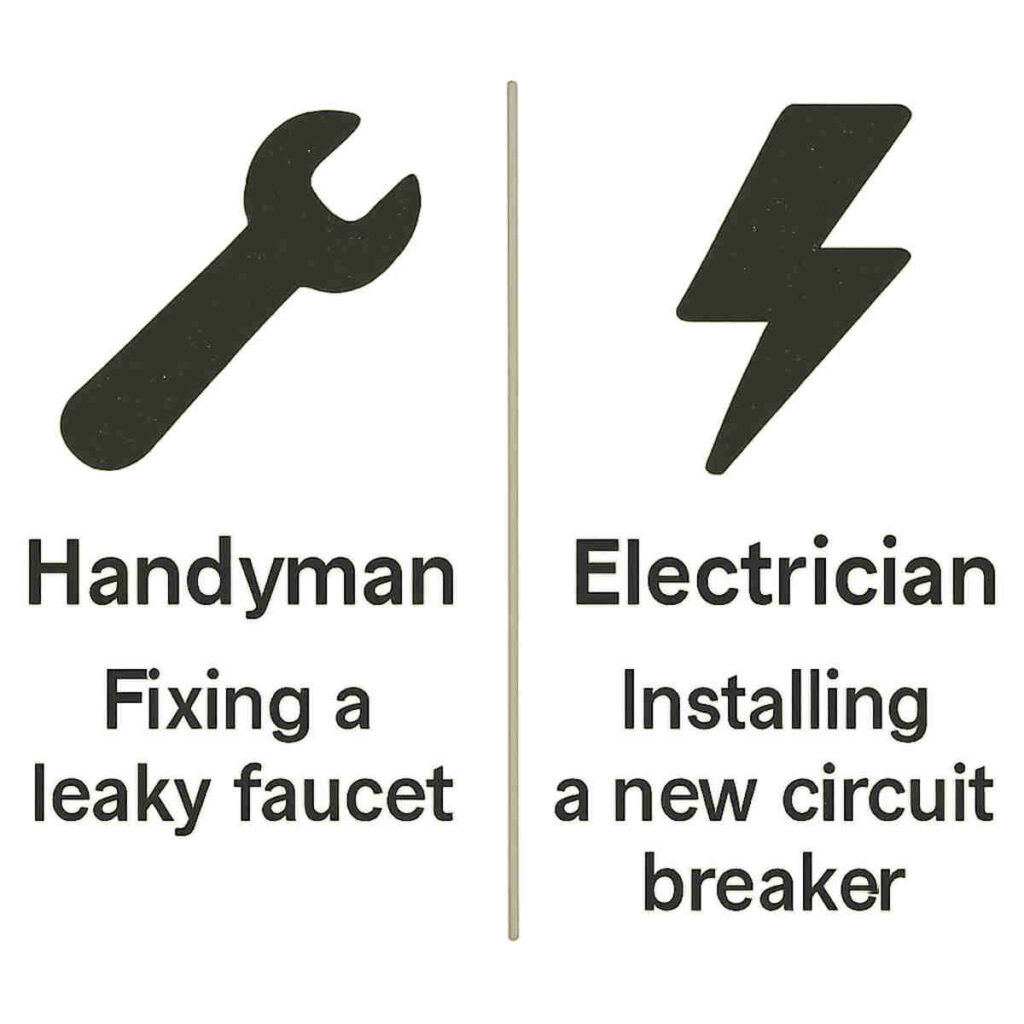
For example, if your kitchen faucet is dripping, a handyman can typically replace the internal parts or even swap out the old faucet for a new one in the same spot. However, if you want to move that sink to a new kitchen island, which involves running new water and drain lines, you must hire a licensed plumber.
The same logic applies to electrical work. A handyman can replace a faulty light switch or install a pre-wired ceiling fan where one already exists. But if you need to run new wiring to add an outlet or install a new circuit breaker in your panel, the law requires a licensed electrician. This handyman vs general contractor in Texas is all about safety and code compliance.
Ultimately, hiring the right professional is about more than just getting the job done—it’s about ensuring your home remains safe. Using unlicensed individuals for regulated work can void your homeowner’s insurance and create dangerous fire or water damage hazards. Making the right call provides peace of mind, knowing the work is up to code.
Decoding Handyman Prices: What’s a Fair Hourly Rate in Dallas?
Once you know you need a handyman, the next question is always about cost. In the Dallas area, the average handyman hourly rate typically falls between $60 and $100 per hour. More experienced professionals or those with specialized tools might be at the higher end of that range, while simpler tasks may be on the lower end. Many handymen also have a minimum charge, often equal to one or two hours of work, just to cover their travel time and make the trip worthwhile.
Beyond the hourly rate, you’ll find that most professionals use one of two pricing models: hourly or per-job. An hourly rate is just what it sounds like—you pay for the time they spend working on your tasks. In contrast, a per-job or “flat-rate” price is a single, upfront quote for the entire project, no matter how many hours it takes them to complete it.
Deciding which model is better often depends on your to-do list. For a handful of small, varied tasks—like tightening a loose railing, fixing a sticking door, and replacing a hard-to-reach lightbulb—an hourly rate often makes the most sense. For a single, well-defined project like assembling a large piece of furniture or repairing a specific hole in your drywall, asking for a flat-rate Dallas home repair cost estimate gives you cost certainty and prevents surprises.
To get the most accurate quote, especially for a flat-rate job, preparation is key. Before you even call, make a detailed list of every task you need done. Taking clear photos or a short video of the problem areas on your phone is even better. The more information you provide, the more precise their estimate will be, which is a crucial first step in how to hire a handyman you can trust.
How to Find and Vet a Truly Reliable Handyman in Dallas
Knowing what a project might cost is one thing, but finding a trustworthy person to let into your home is another challenge entirely. For those looking for help in Dallas, your search often starts best close to home. Begin by asking neighbors, friends, or coworkers for personal recommendations—a referral from someone you trust is invaluable. Beyond your immediate circle, local online communities like a neighborhood Facebook group or Nextdoor can be a goldmine for finding pros who have already done good work for people nearby.
Once you have a few names, a quick phone call can tell you almost everything you need to know about how to hire a reliable handyman in Dallas. Think of this as a brief interview. Your goal isn’t just to get a price, but to gauge their professionalism and determine if they’re a good fit for you and your project. A true professional will be happy to answer a few questions.
This is your chance to properly vet a local handyman before they ever set foot on your property. Here are five essential questions to ask during that first conversation:
- Can you provide a few recent references? (A confident pro will have past clients ready to vouch for their work.)
- Are you insured for this type of work? (This is crucial protection in case of accidental damage.)
- How do you handle pricing for my project—hourly or a flat rate? (This shows you understand the basics and helps avoid confusion.)
- What is your estimated timeline to start and complete the work? (This helps manage expectations for both of you.)
- Do you provide a written agreement or estimate before starting? (A simple “yes” to this question is a great sign.)
In addition to their answers, pay close attention to how they communicate. The most critical red flag to watch for is a demand for a large cash payment upfront. While a small deposit for materials on a larger job can be standard, a professional will never pressure you for the full amount before the work is finished. This is often a sign of an untrustworthy operator and a clear signal to move on.
Ultimately, taking ten minutes to ask these questions is the best way to ensure a smooth, stress-free repair. Getting a clear, written agreement and confirming they have insurance aren’t just formalities; they are essential protections for you and your home.
‘Licensed, Bonded, and Insured’: What It Means for Your Protection in Texas
You’ve probably seen the phrase “licensed, bonded, and insured” on the side of a work truck, but these aren’t just marketing buzzwords. They are distinct forms of protection for you and your home, and understanding them is a key step in how to vet a local handyman. When you hear a professional offers licensed and insured handyman services, it’s a sign they take their business—and your safety—seriously.
Being insured is the most critical piece of this puzzle for small projects. This means the handyman carries a general liability insurance policy. If they accidentally drop a tool and damage your new wood floors or crack a window while working, their insurance company pays for the damages. Without this coverage, that financial responsibility could fall back on you or your homeowner’s policy.
While insurance covers accidents, being bonded protects you from dishonesty or unfinished work. A surety bond is essentially an insurance policy you can claim against if the handyman takes your deposit and disappears or if one of their employees is caught stealing. It’s a guarantee of the professional’s integrity and commitment to completing the job they were hired to do.
The term licensed is where things get specific to Texas law. The state does not issue a general “handyman license,” which is why you see a difference between a handyman vs a general contractor in Texas. However, for work involving plumbing, electrical, or HVAC systems, the state absolutely requires a trade-specific license. A handyman can legally replace a faucet washer, but they cannot legally install a new water heater without a plumbing license.
Ultimately, these qualifications work together as a safety net. They shift the risk from you, the homeowner, to the professional and their insurance partners. Knowing this difference helps you ask the right questions and, more importantly, ensures you hire the right person for the job, especially when a repair moves beyond a simple fix.
Solving Specific Dallas Home Repair Headaches: When to Call for Backup
That doorknob-sized hole in the wall or the patch of peeling paint on the bathroom ceiling is a classic homeowner headache—it’s not a massive project, but it is an eyesore. These are precisely the kinds of jobs where a professional handyman shines. Finding the best handyman for drywall repair, for instance, means you get a specialist’s finish without needing to hire a large painting or remodelling contractor for a one-off task.
But what about when a repair feels truly urgent? It’s important to distinguish between an inconvenience and an emergency. While a wobbly banister is a problem, a pipe actively leaking water is the kind of situation that demands a rapid response. True emergency home repairs in Dallas, TX, typically involve active water damage, electrical hazards, or situations that compromise your home’s security, like a broken lock on your main door. These are the issues that can’t wait until next week.
This sense of urgency often leads homeowners to seek same-day handyman service in Dallas. While many professionals try to accommodate quick requests, this option is best suited for straightforward, predictable jobs. Tasks like mounting a TV, assembling a piece of furniture, or swapping out a lockset are perfect candidates. Because they don’t require extensive diagnosis or a special trip for parts, they fit neatly into a busy technician’s schedule.
Your 5-Step Guide to Hiring a Reliable Handyman in Dallas
That nagging to-do list of home repairs no longer needs to be a source of stress. You’ve moved past the uncertainty of knowing who to call and are now equipped with a clear roadmap for finding a trustworthy handyman in Dallas, Texas. Instead of facing a problem, you now have a process.
Follow this common home maintenance checklist every time to ensure a safe and successful hire:
- Clearly List Your Tasks.
- Ask for Recommendations & Check Reviews.
- Verify Insurance & Ask Vetting Questions.
- Get a Written Estimate.
- Agree on a Timeline.
Once you find a great handyman, keep their number! Building a relationship with a reliable pro is one of the best investments you can make for your home, turning future fixes from a frantic search into a simple phone call. You’re ready. Go tackle that to-do list and reclaim your peace of mind.